
Natural disasters happening with alarming frequency – earthquakes, tycoons, storms, deluge of floods all over the world. Alternating between certain years of droughts are torrential rains in various parts of our country, presently inundating some of our North-Eastern states. Too close for comfort are the spells that paralyze life, disrupt public transport and maroon many parts of our ‘maximum city’ Mumbai – also a startling reminder of the famous economist, Robert Malthus and his classical work we read in our post-graduate classes famously known as the ‘Malthusian theory of population growth’.
We would recall that Malthus examined the relationship between population growth and resources and arrived at the theory that population growth occurs exponentially, so it increases according to birth rate. On the other hand, food production increases arithmetically, so it only increases only at given points in time. Thus he had derived the postulate that, left unchecked, populations can outgrow their resources.
There are two types of ‘checks’ that can reduce a population’s growth rate according to Malthus. Preventive checks are voluntary actions people can take to avoid contributing to the population. Because of his religious beliefs, he supported a concept he called moral restraint, in which people resist the urge to marry and reproduce until they are capable of supporting a family. Positive checks to population growth are things that may shorten the average lifespan, such as natural calamities and disease, warfare, famine, poor living and working environments. The startling prediction was that eventually these positive checks would result in a Malthusian catastrophe which is a forced return of a population to basic survival.
Though later contested by many economists, the subsequent industrial revolution and technological breakthroughs in almost all fields, the Malthus postulates conceived some three centuries ago, suddenly appear too close for comfort.
As one noted ecologist has opined ‘ while global warming is exacerbating environmental disasters, the root causes often lie in poor planning, disregard for good science and citizen apathy’. Studies now reveal that global warming is expected to make vegetables significantly scarcer around the world, unless new growing practices and resilient crop varieties are adopted and environmental changes such as increased temperature and water scarcity may pose a real threat to global agricultural production with likely further impact on food and health and lives of people.
Of greatest concern is the recent report from India’s think-tank Niti Aayog that our county may be heading for its worst water crises and almost 800 million people may face acute water shortage very soon. It also estimates that demand for water will be twice as much as the available supplies by 2030. What will it do to our economy and people ?
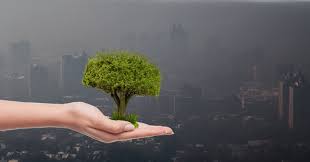
All this highlights the crying need to protect the environment, curb the staggering pollution levels that are engulfing our cities, develop alternate sources of energy, control unbridled population growth and bring about an abiding balance between man and nature – bereft of which, the future doesn’t seem to look very bright for the next generation.
( pic source : the nextweb.com )
 Working on Living