The Cooking Honours Go to…

Of the time-tested ‘few of our favorite things’, is the nostalgia laden ‘Ma ke haath ka khana !’ & ‘home-cooked food’ – be it the simple ‘Roti-daal-sabji-achar’, ‘Kadhi-Chawal’ or ‘Macher-jhol aar bhat’ to name a few. Those who’ve experienced long stays away from family, manage meals with snappy office canteens, ‘dabba-wallahs’ & cafés fast food and yearn for that sublime home-touch. Yet cynics will say ‘Ghar ki murgi daal barabar !’.

There some dichotomy in our palate that the ‘foodie’ in us (let’s confine to urban middle class) is busy exploring new eateries and exotic places to eat out. But even a one-week trip to a fancy hotel or resort results in gorging on lunch/dinner buffets with immense spreads, tempting us to try every delicacy. So when one returns home, it’s ‘dahi-chawal’ or ‘khichdi’ that’s so welcome. I recall our 2016 US trip – when it was time to visit my sister in Indiana, she excitedly called to know what food we’d like. Promptly we said in quintessential Bengali mode ‘Daal, Bhat aar Posto !’

Food specialists, culinary experts and dieticians extol virtues of home cooked food and major impacts on our lifestyle, body, and wallet. You dictate exactly what goes into the meals your family should have. You can avoid hidden sugars, excessive sodium, unhealthy saturated fats typically found in restaurant & processed foods. Studies show that frequently eating homemade meals corresponds to a higher intake of fruits and vegetables, improved digestion, and a reduced risk of diet-related diseases.

I can’t cook beyond ‘breakfast of toast & eggs’ and have been a compulsive ‘MacDonald burger & fries’ and Lucknow’s ‘biryani’ loving man. But I’ve tried to reform thanks to my Home Minister of Kitchen Affairs. IMHO (In My Humble Opinion). Tandra, my better half of 44 years, gets my ‘Padma’ award for contributing to my satisfactory health. Apart from her ‘Chef’ like qualities in every type of cooking, she can make great food from scratch that’s economical. She reads about cookery, plans meals and efficiently utilizes leftovers lowering the food budget compared to often dining out or ordering takeout.  

My Mom, Aunts, Sisters & Nieces, all amazingly took to cooking not only as a family legacy with passion but as a therapeutic, stress-relieving activity. Sharing these recipes fosters family bonding, builds communication and encourages our ‘Gen Zee’ children to develop mindful eating habits early on in life. Just as I love vegetables & fruits now !

‘Masters’ in Reporting

There are some proverbs you just can’t forget like- ‘Jack of all trades, Master of none’ – that was used deprecatingly to describe those who tried their hand at many things but never excelled in anything. Yet most of us dabbled in different streams to eventually become post-graduates having ‘mastered’ in some subject but we couldn’t be ‘Masters’ of the same. And we hardly ever used that academic knowledge in our professions… 

The noun ‘Master’ had connotations of perfection and is attributed to experts in various fields of art, music, literature, science, medicine, new technology, sports etc and those recognized through prestigious awards for their exceptional skills and expertise. This became general knowledge to us  but one delighted in reading poets and writers casting a spell with stories and describing nature. As sports lovers we enjoyed the language of reporters & their labels – Maradona’s ‘Hand of God’ 1986 World Cup goal, ‘Roger, Rafa, Novak’ the ‘Big Three’ of Tennis, Sunny ‘The Little Master’, Dravid the Great ‘Wall’, Sachin ‘God of Cricket’, Saurav ‘God of Offside’, Kapil ‘lifting tallest bowlers’ (for sixes) !

With time, abbreviations came like ‘GOAT’ for the greatest ever. Yet as it happens with the changing mores, the use of such dramatic, over-the-top words from ‘Iconic’ and ‘Phenomenal’ to ‘Incredible’ and ‘Extraordinary’ have been generalized to triviality. In modern day parlance almost anything from junk-food, attires to artists with funky hair styles are  termed as ‘Amazing’, music shows ‘rocking’, good is often ‘Out of this World’ ! Recently in a reality show, the anchor called a popular composer ‘Legendary’ and the musicians as ‘legends’. What do we call iconic singers & composers of golden decades ?

However, today it’s par for the course to hyper-articulate for effect and create an impact. Comparisons are drawn between those present to the past greats and achievements are blown high. The POTUS has become synonymous with words that are misplaced using ‘beautiful’ where it’s hardly so and ‘disgusting’ when he’s not in agreement with others. There’s Shashi Tharoor’s suave linguistic brilliance articulating words like ‘recalcitrant’ (that few understand) and ‘Snollygoster’ and ‘Rodomontade’ that frankly none of us do !      

How then can we not mention our mainstream Media on one side for its exaggerated reports and views that many feel are partisan and the burgeoning Social media reels/posts that present the strong alternate versions of stories and carry unreported ‘breaking news’ – all too confusing for the netizens now completely hooked onto them !  We have become familiar with phrases – ‘setting narratives’ and ‘changing the goalpost’ and speeches containing divisive intent that are termed as ‘Masterclass’ in oratory. Any thing done that outwits political opponents is applauded as a ‘Masterstroke’ carried out.

Rephrasing the old proverb, are we becoming ‘Masters of  Tall Talk and Jack to None ?’ 

The Role Umpires Must Play

Are the numerous umpires playing the balanced neutral role today that they ought to ? Among the lessons we learnt in our moral classes, it was stressed we follow the rules of the game and be sportsmanlike. As brash lads we’d get into scraps while playing gully cricket- nobody wanted to lose, so the ball was stolen or bat broken to prevent the others from winning. It needed a trusted wise person, such as a family elder, to make sure that the boys followed the ground rules, played like sportsmen and didn’t fight like ruffians !

Though the term “Umpire” is relatively a modern one, it has old antecedents essentially meaning “not on par” or “not equal.”. Umpires were not on par with the other players, they were above them, acting as the moderators and the voice of the law. Over time all sports have had umpires or referees with knowledge of the rules and to enforce them on field with complete impartiality. But as the game of Cricket gained popularity it drew huge crowds, prize money and telecasting earnings spiraled and betting pros flourished.

As the competitiveness and professionalism grew and stakes for winning got higher, the On-field ‘Umpires’ started to come under fire. Close calls, snicks, run outs and dubious LBW decisions caused a lot of rancor particularly where umpires appeared to be biased towards a side in making decisions that could changed the match in their favour.

‘Neutral’ umpires from a panel of accredited umpires got introduced in all international matches and worked for some time. But the ‘human error’ factor crept in, as at times lightening fast decisions were needed on field. Then somewhere in the 1990s, came the concept of the ‘Third Umpire’ sitting away from the actual play but armed with the latest in technology to ‘track the ball’ ! Teams had a fixed number of referrals, the third umpire could even overturn decisions of on-field umpires based on replays and interpretation. of the evidence. Yet technology too hasn’t always inspired confidence. Despite the on-field umpires verdicts, ball tracking, replays etc by third umpires have looked dubious !

Finally there’s the issue of on-field behavior that demeans the spirit of the game and for that there’s a ‘Fourth Umpire’ called the ‘Match Referee’ for complaints made by the on-field umpires or team managements against erring players. In many cases penalties are awarded and in severe cases, one or two match bans are levied. Constant improvements to ensure fair play and sportsmanship have been tried out in sports. Yet those playing the Umpire’s role in public posts and entrusted with duties of enforcement of rules, are often found wanting and not working without fear or favour ? ‘Howzzat’ Umpires ?!    

Comedy of Name-Recalling Errors

‘I recognize your face, but I don’t remember your name’ ! That’s the classic joke for awkward social moments and we venerable senior citizens, are susceptible to these. It’s like having someone’s face right on the tip of your tongue yet it’s eluding you ! That’s how it happens with my contemporaries now. Recently, an old friend candidly said on meeting an old classmate: ‘I recall the name, but I don’t remember the face !’ 

Fortunately, people excuse our lapses sincewe ‘old and forgetful’ are liable to be foggy. The problem arises when memory lapses come at the most inopportune times. Imagine a situation, where as a fan I recognised my favorite theatre& film actor at an event and went to him but then struggled to recall his name. He understood my predicament and smilingly said ‘I am him’ ! I’vesince become a bigger fan ofthe cool ‘Joy Sengupta’ !

The biggest offenders are doubtlessly the much harried husbands who’ve entered their autumn years and have to depend on the versatile spouses to help them out with tricky names and vital dates. A veteran of 80 years was asked by his relatives ‘why do you still call your wife of fifty years ‘Honey’.. to which he said ‘That’s because I often forget her name’. Such issues never arose in our grandparent’s era – calling the better-half by name was taboo. My Mom being bolder than others, called my Dad ‘Mr Sinha’ at times.

Apart from the malady of forgetting names, birthdays etc. that we face over time, is the mistaken identity problem that even the celebrities are often subjected to. In a widely reported case (thank the social media for keeping tabs on everyone) famed actor ‘Ram Charan’ found himself at the centre of a viral moment after mistakenly referring to pacer ‘Jasprit Bumrah’ as a footballer at an event. Ram Charan issued a public apology calling it ‘genuine human error’ admitting he was forgetful with names. If a hugely successful star can forget another celebrity superstar’s status, why blameindustrious husbands advanced in years, not to miss out a crucial item from the big shopping list.

While there are today many ways suggested to improve one’s memory, let’s look at things from the perspective of an aged mind about remembering the past. With years of working and living life with its highs & lows under many different situations, not all incidents can be retained in the overburdened mind. As is well known, the long-term memory for milestones, achievements,old passions &happy times is often reignited through association but mundane short term incidents of daily life soon fade out. As Cesare Pavase said ‘We do not remember days, we remember moments’ – ultimately !

Fear is the Key

We often look back and reminisce those exhilarting thriller novels that captured our youthful imagination withtaut suspenseandhigh voltage action building up to tense surprise endings. The protagonistswould bea larger-than-life heroes battling their way through all odds, fighting foes with relentless grit and ironic humour. Among them, I easily recall Alistair Maclean’s 1961 classic ‘Fear is the Key’ that’s a fascinating revenge story with a twist and a book-title readinglike a ‘punchline’.

The story begins with a man in radio contact with his family (wife, son and his brother), when their airplane is suddenly attacked & shot down. Shattered, he wants to find and punish those responsible. He becomes a criminal to get a job as a deep-sea diverand joins the baddies in theirnefarious explorations. Playing a psychological game, he creates with ingenuity a ‘deadly’ situation outwitting them by using the terrifying‘fear’ factor. Aside of MacLean’s war novels, it’ssuperbly slick in the action-thriller genre !

‘Fear’ has a foreboding effect. From the earliest stages children learn to be obedient at home and schools ensure that discipline is maintained through reprimands, detention and punishment. In our time, errant pupils were even wallopedfor breaking rules or shamed in public& it worked. Now that physical ‘fear’ has become the psychological trauma ofnot enough grades in board examstoqualify for few seats, failing in entrance tests, huge parental expectations, peer pressures, social trolling. Theentire education system is facing its sternest test.

For those employed, unrealistic targetsare set andgoals hang like a sword over future promotions and placements. Underachievement may lead to sidelined postings and threats of  job losses. Eternally the work-life balance is affected andan average worker is always under stress to deliver results, whether he works from home or office. There’s a lurking fear of the unexpected to happen and adapting to changes with alacrity and regularity is the order of the day !

Some grow up with psychological barriers against heights, water, confined spaces etc.We go through life’s vicissitudes encountering fears of failure, rejection,risks, financial insecurity, loss of loved ones and valued possessions. Insurance guys talk of mortality &fear of dying too early or dying too late. We must plan for both. Above all comes the fear of losing one’s freedom of expression & to give up the life one dreamtof !But when their fundamental rights feel stifled, people often shun fear & rebel against authority.

Motivational and spiritual leaders teach us means of overcoming fear through resolve and will power and to become ‘fearless’ in our approach to life. The best success stories tell of achievers who fought their inner demons tobecame legends. Newest example comes from 15-year ‘Vaibhav Suryavanshi’, Cricket’s batting prodigy & his dauntlessattitude to the game.Decades ago, Gurudev Tagore gave his vision for our great nation‘Where the Mind is without Fear..’. Let’s never forget -fortune favours the brave !

KKR Rides the Night

On Friday night, it was just another of the IPL T20 matches between two talented teams but performing well below par and in the lower rungs of the Points Table. With the IPL stretching over 45 days there is also viewer fatigue as reported by analysts who claim that viewership in this season has come down compared to last year. However, every match has been drawing huge crowds rooting for their home team and this time the venue was Delhi and predictably there was more ‘D’ red than’K’ purple in the stands !  

What promised to be a closely contested game between a low lying but then resurgent KKR after three back to back wins and Delhi hoping that top players got back to form. But what followed in the next three to four hours belied all the expectations as KKR spinners gained a vice like grip and restricted Delhi to a paltry 141 runs in 20 overs yet Delhi wouldn’t lose hope with top quality pacers in their line up. In fact they had two leading batters down in the power play . Then came a mammoth partnership and Finn & Green chased DC total with 34 deliveries to spare, making it 4 wins on the trot for KKR. Finn Allen’s 100 in 45 balls with 10 6s was mind-boggling century, rare in a small chase.

In a manner of speaking, KKR had annihilated DC in every way and have got ahead of DC in the points table. Yet in the customary post-match on-field interactions, players from teams mingled with sporting camaraderie and KL Rahul was seen congratulating Finn for his amazing innings. The two captains, Axar and Ajinkya, embraced, both being professionals who’ve seen many highs and lows and aren’t shattered by wins and losses.

In heart of hearts DC would feel badly underwhelmed with the loss while KKR could easily gloat with pride with their recent successes. Yet (as in all IPL matches) their on-field behavior was exemplary & far from acrimonious as it needs to be, for in contests there are victors & losers but the winner is the good and fair contest ! This seems restricted to sports like IPL but hugely found lacking in the Indian Political League.   

In the Nervous Nineties

A ‘cricket’ batting century gets much applause but a century in other spheres can attract ridicule like members calling out the LOP for nearing a century of electoral losses. But one century that does seem imminent should cause concern to all of us, notwithstanding all the other noise coming from the recent political upheavals that’s getting huge traction. The Indian Rupee has touched 95 to the US dollar. In cricketing parlance it is ‘in the nervous 90s’ but for very different reasons.

It’s now difficult to summarise the theories we learnt in International Economics back in the 1970s. Whatever one gleans from the general discussions and newspapers, there has been a remarkable slide in the Rupee in the last decade. I recall in our last overseas trip in 2019, some of us grumbled that travel costs were high as we had to shell out 65 to the dollar. Later, my US based sisters visiting India were happy to spend less on the air-fare.

It seems a long time back & there’s been a relentless upward march making us nervous.  Tough to comprehend, exchange rate moved from 45 in mid 2000 to 95  & may still rise.  As of May 2026, the Rupee has faced intense pressure, trading near record lows, with geopolitical tensions affecting the global oil prices and driving capital outflows. Indian Express writes in its Editorial of 6th May, about the manifold ways it hits the economy.  

Thanks to wide dissemination of information through various sources , we know that a weakening Rupee (or depreciation) generally hurts our economy by increasing imported inflation (especially for oil and electronics), raising foreign education and travel costs, and squeezing industries reliant on imported raw materials. As India imports over 80% of its crude oil and significant raw materials, a weaker rupee makes these items costlier, driving up fuel prices and everyday household goods. Electronic items (laptops, smart -phones) & raw materials become more expensive, leading to higher consumer prices.

Conversely, it boosts our export-oriented sectors like IT and pharma, as their foreign earnings translate into more rupees, improving margins. It also increases rupee returns for NRI remittances. But the ‘pros’ are outweighed by too many cons – Foreign Portfolio Investors (FPIs) often pull money out during a rapid depreciation, leading to volatility and potential dips in the equity market. Companies with large foreign debt face higher repayment burdens. As the Indian Express heading says ‘it points to challenges ahead’ !

For us Senior Citizens, there are no plans to travel overseas or send our adult children abroad to study but we all have to contend with the rapidly rising cost of living, medicines, medical treatment and domestic travel. Most importantly, for the aspiring Gen Next and the average ‘Aam’ citizens, they can hope to sing the old song‘..Sabse Bada Rupaiya’ again but maybe not so soon, if the present uncertainty persists !  

‘Chiraiya’ Web Series 

 & Amazing Divya Dutta

(Watch on Jio Hotstar)

Of late we’ve been savoring the qualitative growth shown by OTT films & some of the Web Series that have been made on a variety of out-of-box, thought-provoking and contemporary social subjects that are often bold and hard-hitting. Many class actors have remained under-rated and relegated to side roles in mainstream Bollywood films and its the versatile OTT that’s brought out the plethora of talent that exists, actors who are now proving their mettle in meaningful roles that are age-suited and portraying real-life, relatable characters in contrast to ‘larger than life’ reels created. Like Divya Dutta !

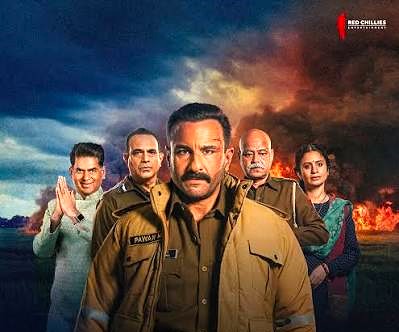
Watching the 6-Episode Web-serial ‘Chiraiya’ brilliantly directed by Shashant Shah, in one binge-sitting yesterday, I was absolutely blown over by the standout performance from Divya Dutta. She lives the role of ‘Kamlesh’, a less educated, mid-aged house-wife in a patriarchal joint family set-up in Lucknow, imbibed with deep seated traditional values. She has firm convictions of right & wrong and places immense faith in Papaji’s  (the family patriarch) moral preaching and love for her small ‘devar’, like her own son !

The real story unfolds when devar ‘Arun’ gets married to a modern girl who Kamlesh cannot at first accept with her English accent and liberal views but later realizes that its because she feels her hold in the family will be threatened since she’s not well educated. The sister-in-law ‘Pooja’ and Kamlesh have a heart to heart talk, and after the latter is satisfied Pooja means well, she vows to teach her the family ways & protect her always.

Just the morning after the marriage night, Pooja implores Kamlesh that she wishes to return home and later disappears, leaving Kamlesh and family befuddled. Later, on her probing Kamlesh finds out a horrible truth. Her faith & worldview is shattered as she discovers Pooja had been raped by her husband (Arun) on their wedding night and it continued even after she returns to her husband following her parents’ wishes. The story thereafter grimly & slowly explores how marital rape is normalized with the patriarchy’s grip and Kamlesh’s uprising from a compliant family member to a defender of ‘Consent’.

The series is an adaptation of the Bengali web series ‘Sampurna’, but we are reminded of similar themes in films (like ‘Damini’, ‘Pink’, ‘Thappad’) but here’s a bold, gritty take on the issue of marital rape, not discussed openly or covered by any law as yet. We may not be satisfied with film’s ending and why a modern day girl didn’t show more fight. The actors play their parts with great sincerity but the real star here is ‘Diyya Dutta’ – I rate her performance as ‘superlative’ at par with the likes of Shefali Shah and Vidya Balan.    

‘High Noon’

(Watch on U-Tube)

The 1971 film Mera Gaon Mera Desh’  was then widely considered a Bollywood “dacoit western” that was heavily inspired by the themes of Hollywood westerns, including elements reminiscent of a classic film High Noon’ (1952) starring Gary Cooper. The Hindi film was considered a major precursor to Sholay (1975), featuring a similar plot of one man (Dharmendra) standing alone and defending a village from ruthless attackers.  

So let’s look at the story of that original vintage western “High Noon’ that won several Oscars and is considered one of the finest films ever made. In a small town, it’s Marshall (in charge of maintaining law and order), who’s newly married, is planning to retire and settle down to a quiet, peaceful life of domesticity. However, news spreads that a vicious outlaw whom he had sent to prison, has been released and will arrive by the noon train, to be joined his younger brother and others of his gang.

Marshall being a man with sense of duty and honor feels that he must stay on to protect the town till the new Marshall arrives to take over. But the rest of the town is petrified and scared that their lives are under threat and despite his urging to come to his aid, everyone flees the town including the Judge who sentenced the bandit, and the Marshall is advised to do the same. His wife gives him an ultimatum that she’d leave without him.  Some people feel that there’s no point in engaging in gunfights with armed bandits while many believe that the Marshall’s fight is not the town’s responsibility. Only very few have the courage to side with him but the Marshall doesn’t want to put them in danger.

When the moment comes, tension mounts in the place that looks like ghost town. As the clock ticks toward noon, left all by himself, the Marshall goes into the street alone to face the bandit and his gang who are fast approaching the town. What follows is a thrilling encounter (with the Marshall getting help from some unexpected quarters)  that must be seen for it’s breath-taking ending – the finale to a battle of courage and high morals.

Why revisit a film that’s pure vintage and more than seven decades old ? Possibly many versions of the inspiring story have been made. Yet art only imitates life and sometimes the oldest stories of relentless courage in the face of huge adversity are reminiscent of the real life battles that we see unfolding before us !

Revisiting ‘Future Shock’

As a young student with a curious mind, one recalls American writer Alfin Toffler’s 1970 bestseller book ‘Future Shock’ as a real revelation, for  the term itself was described as a certain psychological state of individuals and entire societies and a personal perception of “too much change in too short a period of time’. Nearly six decades since then, we have kind of turned shockproof having seen a whole lot of revolutionary changes, driven by huge shifts in technology, politics, socio-cultural values & the dynamics of ‘Power’.

It’s uncanny that a lot of terms now used in context of having ‘POWER’ were familiar to us back in the 1960-70s, because it meant having light or electricity, without which we couldn’t study or work. The biggest setback was if lights failed an evening just before the exam. In times of electricity cuts, candles & emergency lights would be used & life went on. If a prolonged power breakdown occurred during a major event all hell broke loose!

With ‘power’ often playing truant, we were made to realize that it didn’t come cheap and had to be conserved. In the days of frugality and simple living, our parents and teachers set the example to us that fans and lights should be switched off, when not needed, not only in our homes but also in schools, offices and public places. We were sensitized to making the best use of and not waste ‘power’ for there were many in our country, still without it. Today with abundant power we think we have, we don’t care for such small things. Instead we’ve learnt how to easily ‘switch off’ from old friends, jobs and loyalties.

Another thing that was dinned into us was never to be careless while dealing with any appliances that had ‘power’ – a naked wire, a faulty plug or loose connection could give a nasty shock which in severe cases could lead to electrocution. Basic rules were also to carry out such repairs only with gloves & rubber slippers on and if you knew the job. I’ve  always felt that apart from life skills like driving, cooking, swimming, one should know mechanical and electrical odd jobs. Metaphorically speaking ‘POWER’ can get you many things, but ‘shocks’ come to hit you if not prepared to ever lose the ‘Power’ you had..            

Interestingly, much of the terminology that is now associated with ‘Power’ and ‘Powerful leaders ’ has phrases like electrifying presence, high voltage speeches, ‘switched’ over & sent ‘shock waves’ (to the opposition) have all been generously borrowed from Thomas Edison’s invention that brought ‘light’ and shone hope into the lives of people ever after. Therefore, such words are suited to those who work for the well being of fellow humans. 

Pete Hoekstra said ‘Real leadership is leaders recognizing that they serve the people that they lead’. They must set the roadmap and light up the path for others to follow.