And the Legend of Kishore Lives On ….

As a young boy in the early 1960s, when the mellifluous tones of the great Md.Rafi engulfed the radio, one song would haunt me with all its pathos “ Koi Hamdam Na Raha, Koi Sahara Na Raha… “ and that by a amazing singer who had written and composed it all by himself , Kishore Kumar ! This was from a pure genius with God-gifted talent and no formal training in music, that became the inspiration to millions of young people like me, who liked to hum a tune ! 

On his 89th Birth Anniversary, after volumes have been written, expressed and shared about his multi-dimensional charisma and that “incredible voice” as Satyajit Ray had called it, what can any ordinary person contribute as a tribute to the legend except the way he enriched lives and uplifted our spirits yesterday, does even today and will continue to do so agelessly .. 

For  Kishore Kumar’s life and career graph as actor-producer-director-composer and for all a most versatile singer, is nothing short of an epic, as amazing as his abilities ! The evergreen Dev Anand for whom he had sung the very first song of his career on screen in “Ziddi” way back in 1947 (“Marne ki duayen kyun mangoon…) said about Kishore in his book “…a phenomenal singing voice that years later would hypnotize the world with its resonance” . 

The same thought was expressed by talented singer  Sukhwinder Singh “ Kishoreda  had a stereo-phonic voice..”. Both the infectious mirth and “masti” as also the depths of pathos in his inimitable singing style would later be cloned by singers from Kumar Sanu, Abhijeet , Babul Supriyo to Sudesh Bhosle and ofcourse his own son, Amit Kumar, but never with the resonant, magical quality of the original ! 

In his second innings as the voice of Rajesh Khanna in the 70s (and later Amitabh Bachan), Kishoreda charted out superb blockbusters not only under greats S.D. and R.D.Burman but gave his best to almost all other music directors of that time. He even sang the lilting melody “Savare Ka Suraj Tumhare Liye hai …” for O.P.Nayyar. 

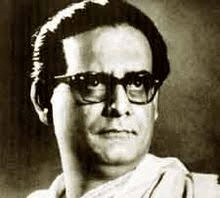
The greatness of those times was the respect given to peers who were professional rivals in playback singing. Kishore would sing Md.Rafi’s classic bhajan “ Man Re Tu Kahe Na Dheer Dhare …. “ in his concerts and shared great rapport with legendary sisters Asha and Lata. It is said that Hemant Kumar ( himself a very great singer and exponent of Bengali Rabindra Sangeet ) wanted a voice to capture the sublime serenity of the song “ Woh Shaam Kuch Ajeeb Thi … “ from film “Khamoshi “ which he felt could only be done by Kishore. What a tune and what a rendition ! 

The nostalgia of old Kishore songs will never fade from our minds. From the youthful exuberant hope of “ Chota Sa Ghar Hoga Badalo Ki Chaoan Mein .. “ to the philosophical journey of the long travel of life “ Panthi Hoon Main Us Path Ka, Anth Nahi Uska …“ , Kishoreda, you gave us all to cherish in happy times or sad times ….
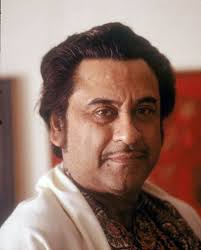

Kishoreda 


And the Legend of Kishore Lives On ….

As a young boy in the early sixties, when the mellifluous tones of the great Md.Rafi engulfed the radio, one song would haunt me with all its pathos “ Koi Hamdam Na Raha, Koi Sahara Na Raha… “ and that by a amazing singer who had written and composed it all by himself , Kishore Kumar ! This was from a pure genius with God-gifted talent and no formal training in music, that became the inspiration to millions of young people like me, who liked to hum a tune !

On his 89th Birth Anniversary, after volumes have been written, expressed and shared about his multi-dimensional charisma and that “incredible voice” as Satyajit Ray had called it, what can any ordinary person contribute as a tribute to the legend except the way he enriched lives and uplifted our spirits yesterday, does even today and will continue to do so agelessly ..

For  Kishore Kumar’s life and career graph as actor-producer-director-composer and for all a most versatile singer, is nothing short of an epic, as amazing as his abilities ! The evergreen Dev Anand for whom he had sung the very first song of his career on screen in “Ziddi” way back in 1947 (“Marne ki duayen kyun mangoon…) said about Kishore in his book “…a phenomenal singing voice that years later would hypnotize the world with its resonance” .

 The same thought was expressed by talented singer  Sukhwinder Singh “ Kishoreda  had a stereo-phonic voice..”. Both the infectious mirth and “masti” as also the depths of pathos in his inimitable singing style would later be cloned by singers from Kumar Sanu, Abhijeet , Babul Supriyo to Sudesh Bhosle and ofcourse his own son, Amit Kumar, but never with the resonant, magical quality of the original !

 In his second innings as the voice of Rajesh Khanna in the 70s (and later Amitabh Bachan), Kishoreda charted out superb blockbusters not only under greats S.D. and R.D.Burman but gave his best to almost all other music directors of that time. He even sang the lilting melody “Savare Ka Suraj Tumhare Liye hai …” for O.P.Nayyar.

The greatness of those times was the respect given to peers who were professional rivals in playback singing. Kishore would sing Md.Rafi’s classic bhajan “ Man Re Tu Kahe Na Dheer Dhare …. “ in his concerts and shared great rapport with legendary sisters Asha and Lata. It is said that Hemant Kumar ( himself a very great singer and exponent of Bengali Rabindra Sangeet ) wanted a voice to capture the sublime serenity of the song “ Woh Shaam Kuch Ajeeb Thi … “ from film “Khamoshi “ which he felt could only be done by Kishore. What a tune and what a rendition !

 The nostalgia of old Kishore songs will never fade from our minds. From the youthful exuberant hope of “ Chota Sa Ghar Hoga Badalo Ki Chaoan Mein .. “ to the philosophical journey of the long travel of life “ Panthi Hoon Main Us Path Ka, Anth Nahi Uska …“ , Kishoreda, you gave us all to cherish in happy times or sad times ….

Kishoreda 


What a Mess(i) !

Shakespeare in his incomparable style had a distraught ‘Macbeth’ ponder ‘Tomorrow and Tomorrow … Life is but a walking shadow, a poor player who struts and frets….’ in one of his immortal tragedies of epic proportions.The lines highlight the fickleness of fame and fortune, success and victory which all mortals must face – even if it’s Lionel Messi, currently rated the world’s best soccer player. That fateful Saturday night when Argentina crashed out of the World Cup against a raging red-hot French team, that gave them no quarters to equalize the score, many dreams were shattered !

A disconsolate Messi may now announce his retirement from international soccer bringing down the curtains to what can be described as an incredible career spanning about two decades. It’s so fascinating that at the age of 31, Messi has been considered the best soccer player in the world and regarded by many as the greatest of all time in the tradition of the great Maradona.

Born in Jun,1987 as Lionel Andrés Messi Cuccittini, the remarkable story of his life started in Central Argentina. Initially not strong he was diagnosed with a  growth hormone deficiency as a child. At a very young age of 13, he relocated to Spain to join Barcelona and later made his competitive debut  aged 17 in October 2004. Thus began the spectacular era of Lionel Messi.

Having played professional soccer for the Spanish Club ‘Barcelona’ with  whom he spent his entire career and of course his own Argentine National  Team, over the years, Messi has been one of the most prolific goal scorers and creative playmakers having been the recipient of innumerable awards, prizes, trophies for his teams and huge recognition in the soccer world.

Messi became the youngest Argentine to play and score in a FIFA World Cup during the 2006 edition, and reached the final of the 2007 Copa America , where he was named young player of the tournament. As the squad’s captain from August 2011, he led Argentina to three consecutive finals: the 2014 World Cup, for which he won the Golden Ball, and the 2015 and 2016 Copas America.

FIFA 2018, will be remembered not only for its many upsets (with last year’s champions Germany and Ronaldo’s Portugal making early exits ) but also for becoming swan song of possibly one of the most gifted and classy  practitioners of the wonderful game of football !

Messi himself has been quoted as saying “My motivation comes from playing the game I love. If I wasn’t paid to be a professional footballer I would willingly play for nothing” ! Apt words from a truly great sportsman of this generation.

messi


RD and the Great “Pancham” Swar

It is absolutely heartrending and so reassuring that ‘class’ is permanent and can never fade as was the musical genius of the incomparable R.D. Burman and fondly known as “Pancham” and whose 79th Birth Anniversary yesterday was marked with many celebrations !

After a spate of remixes of his superb creations by lesser equipped musicians and directors, there remains sheer all round admiration among followers of all ages of the original – his immense creativity and innovative processes far beyond his time. Along with musical shows to commemorate the occasion, 91.9 FM radio has a month long morning slot in his memory with contributions from many of his protégés.

While purists have their own thinking of the western influence and mix in Pancham’s tunes, there are many classical gems like ‘Aayo Kaha Se Ghanshyam..’ sung beautifully by Manna Dey in “Buddha Mil Gaya”, the incomparable compositions in films like ‘Amar Prem’, ‘Parichay’ and ‘Ghar’ and chartbusters with classical flavours and also with folk music like the Kishore special ‘Meri Pyaari Bindu…’ from ‘Padoson’. It would be such pleasure to have 91.9 FM also playing lesser known gems like  ‘Jaane Kya Sochkar..’ by Kishoreda from ‘Kinara’ , ‘Kya Hua Kis Baat Par..’ by Amit Kumar from ‘Teri Kasam’, and ‘Kiska Raasta Dekhe..’ from ‘Joshila’ again by Kishore, apart from super-hit favourites from ‘Hare Rama Hare Krishna’, ‘Sholay’ and ‘Hum Kisise Kam Nahin’ !

While RD forged a life long alliance with the virtuoso songstress Asha Bhonsle culminating in marriage, his best and unforgettable tunes were reserved to be rendered by the versatile Kishore, who was well on his way to a superb comeback as the voice of superstar Rajesh Khanna in the 70s( and later equally effective as the voice of Amitabh Bachan !) – RD’s effervescent music formed a formidable combo with them and Kishore till the late 80’s. It seems with the passing away of Kishore in mid-80s and the advent of crass culture in Bollywood music, RD started losing his touch with the Hindi film industry which had revered his talent for so long.

As a devoted fan and follower of the father, S.D.Burman and then his son, R.D. for the last forty five years, one thing baffles people like us. While many stars have received recognition and rewards far beyond their actual worth, at times, true legends like these have often not been applauded in the same measure. In the case of Pancham, how could the industry suddenly disown and get disenchanted with his melody till he came back with a blockbuster like “Love Story-1942” as his swan song !

Despite being the son of a legendary music director, RD created his own style and flavor of modern Indian music which withstood the test of time ! Today, the world of Hindi cinema remembers RD as the pioneer of innovation in film music, an ‘avant garde’ in his quintessential musical sensibilities which all composers revere and would love to emulate !

RD Burman

( pic source : hindustantimes.com )

June’s Here, Can ‘Mumbai Rains’ Be Far Behind ?

In Hrishida’s delightful 70’s breezy comedy “Chupke Chupke’, the dimpled heroine bashfully sings ‘Ab Ke Sajan Sawan Mein, Aag Lagegi… ’ to conjure up visions of idyllic joy and gay abandon, welcoming the monsoon rains, while Big B in one of his earlier films, croons Kishoreda’s evergreen melody ‘ Rimjhim Gire Sawan, Sulag Sulag Jaye…’ with the same heady romance. These are only two of the many scores of musical treats dedicated to the rains by the imaginative Bollywood song-writers since decades, so much so, that a song-dance rain sequence was mandatory in Hindi films till some time ago.

Why do rains bring such emotions of liberation and mystic adventure with all its myriad hues, lush greenness and even rainbows on odd days ?! What deserve special mention are the famous ‘Mumbai Rains’  that typically hit the metropolis (and the state) in June first week and last about two months. The famed ‘Mumbaikar spirit’ is known as much by its undeterred ability to weather the lashing winds and heavy downpours as being enthralled by the lyrical ‘monsoon’ flavors akin to the surreal aura created in our films !

The love Mumbai has had for it’s rains is simply quite incomparable. The maximum city that runs over each other all throughout the year and where, life in general and commuters in particular, mean no less than a struggle, all takes a break for good month or two as it breathes the cool ‘monsoon’ air that brings the soaring temperatures and sultriness down dramatically.

There are certain experiences that everyone living here should have to make the Mumbai rains a memorable one. One of my first cultural initiations to this city was the walk along the iconic Marine Drive with Arabian Sea winds blowing across a strong drizzle. Watching huge waves lashing the rocks on Bandra Bandstand or the Worli Sea-face is another major draw for people  across the megapolis, while thousands throng the Juhu beach in the rains. The historic Gateway of India is the perennial tourist’s delight with ferries and catamarans plying across turbulent waters of the Arabian Sea for a thrilling experience. What add to the ‘monsoon’ flavours are the eateries working overtime – from ‘chai, vada-pav and bhujias’ of the road-side vendors to the classy, quaint cafes of South Mumbai, the range is awesome !

Over the years, with the teeming millions that have made Mumbai their home, the endless high-rises springing up to cater to them, ineffectiveness of the BMC to keep the roads travel worthy, authorities continually engaged to extend the metro rail network and such other factors have put immense pressure of city’s infrastructure and drainage system-consequently every monsoon becomes a nightmare for commuters with almost all major roads getting water logged, potholes galore, dilapidated buildings, trees crashing down, local trains delayed, buses, cars getting caught in huge traffic snarls ! Maximum city’s ‘monsoon’ joy is slowly transforming into maximum woes.

Yet with Mumbai there’s always hope that things will surely improve – for Mumbaikars will yet say  ‘Jo Bhiga Hai, Woh Baarish Se Nahi Darta Hai..’ !

Mumbai Rains

Magical Melody of Hemanta Mukherji

One of the great benefits of being senior is getting to spend more quality time with retired, elderly folks and sharing their encylopeadic knowledge of classic films, music, literature et all ! Visiting us, Ma-in-law, an absolute Bengali TV buff, informed that there so many Hemanta Mukherji songs being played on Kolkata DD since it’s the legend’s 98th birthday today !

For music lovers like us ( albeit from the 60s), Hemanta Kumar’s name spelt many things. A beautiful, deeply soulful voice, which melody queen Lata described a ‘poojari’s pure prayer in a distant temple’ – you recall his ‘chupa lo yun dil mein pyar mera, ki jaise mandir mein lao diye ki ..’ !

His pathos-filled unforgettable gems ‘ jane woh kaise log the jinko..’ and ‘teri duniya mein jeene se, toh behtar hai ki mar jayen..’ or “ kaise koi jiye, jehar hai zindagi..’ to the haunting ‘yeh nayan dare dare…’and ‘na tum hame jano, na hum tume jane..’ to the delightful ‘bekarar karke hame yun na jayiye …’ and many other film songs in Hindi, are timeless melodies of a complete singer with an incredibly manly yet silken timber.

But, he was much more of an artiste par excellence than just a playback singer… Hemanta Mukherjee, often credited as Hemant Kumar , outside Bengal, was an Indian playback singer, music director and film producer, who sang in Bengali,Hindi & other Indian languages . His superb compositions in classic films like ‘Sahib, Biwi aur Ghulam’, ‘Bees Saal Baad’, ‘Khamoshi’ and others in the 50-70s remain immortal till today !

In Kolkata film industry, he came to be popularly known as the voice of the legendary actor ‘Uttam Kumar’ and was associated with him as a super-hit jodi of that era when romantic Uttam-Suchitra pair was a rage.  He was also the greatest exponent of Rabindra Sangeet. In the 1960s he was the predominant and lead male voice in many of Tagore’s musical dramas. With Kanika Bandopadhyay and Suchitra Mitra who were the lead female voices in these, he was part of the Rabindra Sangeet triumvirate that was popular and respected. It was referred as ‘Hemanta-Kanika-Suchitra’ and, with Debabrata Biswas, this quartet was to be the mostly heard exponents of Tagore compositions.

Though, he won two National awards for the category best male playback singer he richly deserved much higher accolades from the highest level.

His legacy still lives on through his memorable songs, the music he had composed, and through many male singers in Bengal and the rest of India who continue to emulate his inimitable resonant singing style. The exquisite Hemanta Kumar music will always mesmerize us with its lilting melody ‘ tuum pukar lo, tumhara intezar hain..’

Hemanta Mukherji

Why Not Kishoreda ?

Had the iconic singer, actor, producer, director, composer, writer and stage artiste extraordinaire- Kishore Kumar, been alive, he’d be 88 years old – but legends never die, they live on in our hearts swaying us with untold happiness and creating pure magic for generations to come ! So much has already been written and said about the eccentric genius and how he inspired innumerable singers to emulate his inimitable style –some to achieve great heights but most as mere imitations of the gem !

That Kishore was a musical masterclass with no formal training and an absolute maverick akin to a rock-star, is part of Hindi film industry folk lore, as he yodeled his way in trademark style, across an incredible life journey and career starting from the film ‘Musafir’ in 1954, spanning nearly four decades, including phases of near oblivion and a remarkable come-back in 1971 as the voice of then rising superstar, Rajesh Khanna (and later of Big B himself and most other leading actors in the 80s !).

What is lesser known is the altruistic side and sensitivity of a reticent, lonely man in love with nature, seeking perfection in his relationships and craft he loved. Inspired into singing and acting from legends like K L Saigal, and elder brother Ashok Kumar and Satyajit Ray, in the art of film making, an outright protégé of the great singer-composer, S D Burman (and later the favourite singer for his son, R D Burman) some of Kishore’s best works were reminiscent of gentility of Rabindra Sangeet and Western Classical Music !

Why is it that such an legendary performer of extraordinary talent, who completely dominated Hindi film playback singing in the 70s-80s, could never have been honoured with a national award in his lifetime ! While so many forgettables in the ‘neta’ and ‘abhineta’ category have been recognized and decorated with the highest national awards, that unforgettable voice that brings joy to millions even today, seems to have been overlooked in the era of imagery of overrated achievers created through marketing hypes, promotions and connections.

But icons of the likes of Kishoreda, Rafi Saheb, Manna Dey and Hemant Kumar do not really need certificates of excellence – they have millions of fans of all ages for their evergreen melodies which have stood the test of time. Possessing immense pride, hugely gifted in their craft yet with the humility of truly greats, such maestros would never crave for awards.

For Kishoreda, ‘Jhumroo’ was a musical masterpiece but even he would agree that fans will not allow him the sorrow of “Koi Hamdam Na Raha, Koi Sahara Na Raha ..” but march along singing those beautiful lines written by him “ Aa Chal Ke Tujhe Main Le ke Chalu…….Jahan Gam Bhi Na Ho, Aansoo Bhi Na Ho, Bus Pyar Hi Pyar Pale..”

Kishore