‘Sanju’ – Biopic with a Heart

Unlike many other enterprising people I don’t rush in for first day shows preferring to wait for reviews to educate or pre-warn of the impending three-hour experience ! For  ‘Sanju’ we made an exception simply because somewhere there’s always been a soft spot for that marvelous and maverick actor who made the ‘Munnabhai’ character a cult with his bohemian ways and cavalier style !

It’s also easy to understand the complexities and risks in constructing the biopic (albeit with shortcomings and omissions) of three hours, spanning four decades of the turbulent life and times of actor Sanjay Dutt (Sanju) – wayward, errant and junkie star-son, turned sought after superstar turned law-breaker and jailbird – the only son of such respected and celebrity parents as veteran actors, political  luminaries like Sunil and Nargis Dutt !

The film is not a classic in the league of ‘Munnabhai’ franchise or “Three Idiots’ which made director, Raj Kumar Hirani, a master-teller with his finger on people’s pulse. Yet it comes with it’s own strengths of a pulsating screenplay, sardonic doses of humor and moving intensity of human relationships.

‘Sanju’ is the resurgence of Ranbir Kapoor as an outstanding actor who lives the role of a helplessly weak, self-destructive, impetuous youth who wittingly or otherwise constantly got on the wrong side of law but later came to terms with his many misdemeanors, finally incarcerating himself with serving a jail sentence but not before getting his name cleared from the TADA accused list.

The other side of this remarkable story is the highly principled and upright etching of great moral stature of Sunil Dutt’s character, brilliantly portrayed by Paresh Rawal – in fact the film can also be a tribute to the fine qualities that Sunil Dutt possessed as a man and a father, the relentless battles that he fought for his son on various fronts till the end. There’s a moving fictional speech which Sanju prepares for his father for he can’t thank him enough for drawing him out of abyss of failure to a life of meaning !  Paresh Rawal’s superlative act is supported by a superb power performance by Vicky Kaushal and a sweet cameo by Manisha Koirala as Nargis Dutt.

Finally the misses, which are quite a few. Understandably to keep everyone appeased, nothing is spoken of his various affairs with his co-stars but why  have no mention even of his first wife and daughter from her. In a film dominated by larger than life figures and lots of  bromance between Sanju and his life-long friend, the female characters are low key including Sanju’s sisters and stars Sonam Kapoor and Anushka Sharma seem quite inconsequential in their roles.

Despite its omissions and indulgence, ‘Sanju’ is a moving experience that’s all about frustrations, hope, endearment and lasting relationships. In the last scene, Sanju himself tells his son “Try to become like my Father, don’t try to be like your Father !”.

I specially felt happy when my wife said after the movie ‘Thank you, Sanju ’ – you see my nickname too is Sanju !

Sanju

Shock Treatment

There are two ways of looking at an avante-garde film like ‘Veere Di Wedding’ that’s making waves today. The first could be, as a frothy breezer in the genre of a bawdy adult comedy where the comic parts lie not in the situations but the stream of expletives used with gay abandon in the ‘bindaas’ attitudes of four educated young women, bonding towards shrugging of repressive social norms, including male-bashing if necessary !

The protagonists, appear to represent certain class of society which is well-to-do with affluence but has messed-up private lives with the usual ills – broken homes, bad marriages and failing relationships. They are made to come across as bold and brassy in their approach to life ( and most of all to the institution of marriage and ‘ostentatious’ symbols like elaborate ‘wedding ceremonies’ ) and defying all norms, smoke, drink, swear at will, as if there is no tomorrow !

The other approach of trying to analyze the film for its cinematic contents, is fraught with pitfalls. Obviously, inspired by the “Sex and the City’ series which were hugely popular abroad for their depiction of liberated women at their ribald best and out discover all that life has to offer, ‘Veere’ to an average Indian audience would probably ‘outrage’ the modesty of the genteel class with its profanity that comes hard and fast like never before. However, if the intention is to shock people out of their senses or convey that using colorful language is the norm with young women of today, then it seems to be working, looking to reactions and applause from some of them.

Leaving aside, the shock value of outrageous one-liners and crass jokes, the story-line is weak and only one of the characters seems to have some teeth. The two big stars (Kareena and Sonam) don’t really produce any histrionics  while Swara Bhaskar (and Talsania ) try to come up to their ‘bohemian’ best, un-dress the part and raise a few bawdy laughs too ! In fact a great one-liner comes from one of the fathers in the film – ‘All marriages will have fights, in fact marriage is the foundation of fights !’ A new vision for newly-weds ?!

At the end of two hours, one feels ‘Veere’ seems to have been stitched up for some bold messages from a woman’s perspective and strong bonds that women share that outlasts all else. Somehow, among all the noise, hype and drama, the soul of this film on deep friendship and relationships is quite missing. Farhan Akhtar made ‘Dil Chahta Hai’ on male –bonding a few years back that moved us – revisiting that beautiful picture is a much better option.

Veere Di Wedding

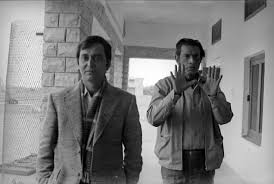
The Unbeatable Soumitra Chatterjee

For Indian cricket, the name Sachin is revered God-like (and yes, of a billion dreams !) and in the same vein, for the Bengali films, Uttam Kumar was ‘Mahanayak’ the ultimate legend whom Kolkata swears by ! But as die-hard fans ( of cricket and Bengali films ) would acknowledge, for sheer consistency, conscientiously cultivated talent and class over several decades, cricket has ‘the wall’ in Rahul Dravid and Bengali films, perhaps with the longest innings ever played, the amazingly gifted and ageless star actor and theatre personality, Soumitra Chatterjee !

Soumitra Chatterjee is one of the most prolific actors of the Bengali film industry and has worked with legendary director Satyajit Ray on numerous films. His body of work has been widely regarded as a milestone in Bengali cinema. He made his silver screen with the film Apur Sangsar (1959), which was directed by Satyajit Ray. He then went on to act in some of the biggest hits by Ray, including Devi (1960), Teen Kanya (1961), Abhijan (1962), Charulata (1964) and Kapurush (1965).

One of his  memorable  and which I still enjoy with childlike mirth, were performances as the super sleuth ‘Feluda’, a Sherlock Holmes like character created by Satyajit Ray in his wonderful detective series of ‘Sonar Kella’ and ‘Joy Baba Felunath’ ( there are several other films of  Feluda with other actors but none with Soumitra’s suavity !)

After establishing himself as a talented actor, Chatterjee starred in a wide genre of Bengali films like Baghini (1968), Parineeta (1969) and Jiban Saikate (1972). However, his real breakthrough came in the film Devdas (1979), which cemented his reputation as a maverick actor. Thereafter there was never any looking back for the man who worked with great film-makers like Mrinal Sen, Tapan Sinha, Asit Sen and Ajoy Kar but is still best-known for his incomparable work with the master craftsman and tallest cult figure, Satyajit Ray.

In a sort of second innings, Chatterjee collaborated with Satyajit Ray again, this time for classics like Aranyer Din Ratri (1970), Asani Sanket( 1973), ‘Feluda’ series in the 70s, Hirak Rajar Deshe (1980) and Ghare Baire (1984). Following this, Chatterjee also starred in some of last of Ray’s celebrated films, Ganashatru (1989) and Shakha Proshakha (1990) and also few lesser known ones. In one of his interviews Soumitra himself has said of Ray  “..Maybe there was some convergence in our thoughts too. He was a rare genius, I am not close to him by any standards yet I guess there was some parity of thought – the legacy of the Bengali educated middle class, the legacy of Tagore…”

Now, at the age of 83 years, Soumitra is still going strong with his innumerable portrayals of a senior citizen and family patriarch facing the dilemma that today’s elders face with the liberalized modern generation and their changing value-systems and nuclear families. One of his recent Bengali drama films ‘Posto’ is one such poignant story of the undying love and bonding of grandparents with the grandchildren with heart-wrenching consequences.

What can be said about Soumitra Chatterjee’s contribution to Bengali cinema. Most deservedly he has been the winner of the prestigious ‘Dada Saheb Phalke Award’ and many national awards in recognition of his huge body of work. The question one may ask (without sounding blasphemous !), would Ray’s films be the same without Soumitra?

Soumitra and Ray


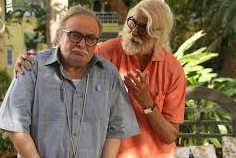
What a Superb 102 Not Out !

Sometimes it just needs two players in a great partnership to string a memorable match-winning innings together – that’s exactly what the film ‘102 Not Out’ does, sans big sets, histrionics, fights, romance and the biggest surprise – no leading lady ( not even in the flashbacks ) !

What makes it work hugely is the sparkling screenplay ( somewhat in the nature of a two-act play),witty dialogues, hilarious situational comic scenes, a fresh musical score but above all, the  incredibly stunning performances by two versatile, veteran actors like Amitabh Bachchan and Rishi Kapoor (not to forget the lovely cameo of a third character, played by a young Jimit Trivedi with the right amount of awe and innocence ! ) .

Big B is absolutely marvelous as he revels in another remarkable role ( after ‘Piku’ and ‘Pink’ ) this time of a 100+ quintessential character, a happy prankster,  who’s perennially young-hearted and loves to spread good cheer all around but more specially to rejuvenate the life of his 75 year old, irascible son. In fact, Bachchan Sir does an ‘Anand’ (Hrishikesh Mukherji’s old classic of the 70s) here as he breathes life and joy and lights up the screen as he enters, countering all the despondency that comes with old age, sickness and inevitable loneliness that surrounds it.

Rishi Kapoor, as the disgruntled son who has accepted the futility of an old man’s existence, proves to be the perfect foil to his boisterous and chirpy Dad who’s always out to test his patience. In a heart-rending turn of events his character resurrects itself again and this Rishi does so effortlessly with all its nuances and poignancy of coming to terms with harsh realities of life.

It would be difficult to conceive of an appropriate end to such a fine inspirational father-son tale – yet what pleased many like me, was how the film leaves you with feel-good thoughts laced with a bit of poetic justice ! But to reveal that, would be depriving others of 100 minutes of happiness !

102 Not Out

‘Parmanu’ – A Valiant Effort

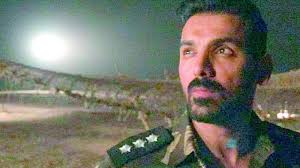
It needs courage and conviction to pick unconventional themes and less commercially viable subjects to make meaningful films. The latest additions to that list of artists and film-makers are actor-producer John Abraham and director, Abhishek Sharma who undauntedly have put together an engrossing, two-hour film ‘Parmanu: The Story Of Pokhran’ based on the Pokhran II tests in 1998, after which India was recognized as a nuclear power on the global stage.

To research and zero in on a true story of great national importance which has been, however, less hyped over the years in terms of achievement and taking a few cinematic liberties to create a gripping docu-drama and bring alive all the fascinating history of India’s biggest nuclear breakthrough is a most laudable effort by the team of makers.

To pick holes in the story-telling and fictionalized version of events would be easy for such a technically difficult subject to portray on screen packaged as an exciting and suspenseful sequence of events. What is also achieved is building up the fusion of three basic parts of the nation’s security, the nuclear scientists, the army and the intelligence agencies buttressed by some proactive bureaucratic support, all culminating into great patriotism and nationalistic pride. At the same time the film avoids the trap of  the usual jingoism and over-the-top hype of our the mainstream masala films .

John Abraham, in his new avant-garde avatar as a sensitive actor brings the same intensity to his role as he did in ‘Madras Café’ and is well supported by Boman Irani and Anuja Sathe with stellar parts. The other actors and ‘Pokharan’ desert storms lend fair authenticity to building up the tense aura of a fight against time and fending off  many forces that would prevent the successful completion of the nuclear tests in 1998, having failed once before in 1995.

Two significant comments here – one, that the show was full of College students (who would love to see what we can be truly proud of and the real people like scientist Abdul Kalam our Ex-President, behind it ) and two, the horrendous trailer of another Salman Khan magnum-opus in the making – ‘Race 3’ – one-man demolition army at work again ! ‘Parmanu’ in stark comparison is a classic, in its simplicity and sincerity of purposeparmanu 2.


The Eye of ‘Raazi’

From the first few frames of  ‘Raazi’, one can brace oneself for a classic, period film (based on history fictionalized) and in the genre of nerve-wracking spy-thriller ‘Eye of the Needle’ based on Ken Follet’s brilliant novel that we’d thoroughly enjoyed back in the 80s ! Yet, despite being so gripping and crisp in its narrative, it doesn’t carry the gore and coldly ruthless aura of Frederick Forysth’s celebrated spy-yarns ‘Day of the Jackal’ and ‘The Odessa File’.

The challenge primarily lies in the theme of pulling off an overtly daring espionage operation in tension filled Pakistan, preparing for full scale conflict against India, yet depicting it sans chest-thumping and jingoism that would normally be part of the patriotic fervor that gets generated on such issues. The other remarkable aspect are the subtle characterizations of the principal players, almost all of whom are Pakis, but display quiet grace and humane dignity not usually associated with sworn foes even on celluloid – justification, each one must owe allegiance and protect the motherland.

The film entirely belongs to two super performers – Meghna Gulzar, the Director who seems to effortlessly create magic from behind the camera with a taut, suspenseful screenplay and riveting background score and Alia Bhatt, the star, simply stunning in the lead role. However, Vicky Kaushal is quite superb in his understated act as the guileless and devoted husband, caught in crossfire of treachery and murder in his own backyard. The others are also so quietly impressive.

The message, apart from the selfless sacrifice of many unsung warriors for the nation’s cause, is that in war and survival, there are no explanations sought or given for the toll that it takes – it’s unrelenting, heartless and comes with a heavy price to so many.

Raazi film

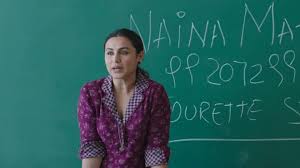
To Teacher With Love

‘There are no bad students, only bad teachers..’ – is a telling statement from Rani Mukerji’s thought-provoking comeback film ‘Hichki’ as are many little other gems both in terms of the script and well-etched performances by the young actors and the dignified handling of a difficult subject but above all the effortless way, Rani Mukherji puts her heart and soul into a complex role which inspires, as did her incredible ‘blind’ act in ‘Black’ a decade ago.

While the credits state that its adapted from the English movie ‘Front of the Class’ , it reminded one of the Sidney Poiter classic based on the 70’s best-selling novel ‘To Sir With Love’ with significant similarities. Here Poiter as the teacher, has to deal with delinquent young students considered beyond redemption, with all their problems alongwith racial abuse as he is ‘black’ !

Cinematic license apart (in depicting the modern-day education scenario, student interactions and the teaching methods), what scores for ‘Hichki’ is the indomitable spirit shown by a young teacher, never buckling down despite the general reluctance to accept her capabilities due to her innate speech impairment. There are lessons to be learnt here – from courage and conviction to leadership roles, team-spirit, loyalty, grit, innovative thinking and those precepts that must go into building up this generation of youth !

Lovers of good cinema will laud Rani’s great comeback, coming soon after a happy one from Vidya Balan (in ‘Tumhari Sullu’). While it’s being reported Vidya will essay the role of late PM, Indira Gandhi this year, more  women-oriented roles need to be conceived for actors of such caliber. What about a script on the lines of Audrey Hepburn, 60’s nail-biting thriller ‘Wait Until Dark’  or the more recent, edgy & compassionate  ‘Three Billboards Outside Ebbing’ which won actress, Frances McDormand this year’s Oscar ?Rani in Hitchki


Sublime ‘October’

Remember Ryan O’Neal and Ali McGraw in the 60’s American cult film ‘Love Story’ which, with all its poignancy, left us utterly starry-eyed and heavy hearted in our teens ! Now, after fifty years there’s a sense a déjà vu with Shoojit Sirkar’s latest offering ‘October’ – another sublime love story with a difference, reminiscent of that era of films where gentle and selfless romance could be conveyed with subtle sensitivity.

Here’s a Hindi film bereft of songs, dances, action-scenes and any known stars in the female lead roles yet has a haunting background score by Shantanu Moitra (of Bengal), pulsating with deft cinematography in which director Shoojit Sirkar  etches out his edgy characters almost with a ‘Bimal Roy’ kind of sensibility that touches and leaves a lump in the throat.

What’s most remarkable is the generally effervescent Bollywood star, Varun Dhawan’s stunningly sensitive portrayal of unsung, diffident loser with a soft heart who’s often outraged at receiving the wrong end of the stick and who by stroke of fate, has to come to terms with his own commitments in life and convictions that he must follow even if it means untold sacrifice. Supporting him admirably with a superbly under-stated performance is veteran Gitanjali Rao and the newbie Banita Sandhu in the lead role.

With its languid pace and shorn of heavy duty dialogues, ‘October’ is an experience that may not be everyone’s cup of coffee (or tea) but leaves one with a great deal to reflect upon, more so for those who seek the true meaning of ‘love’ !


Another ‘Spielberg’ Special –‘ The Post’

Good cinema draws people in droves specially from those acclaimed makers like ‘Steven Spielberg’ who gave us those gut-wrenching yet uplifting WW II docudramas of heroism and valour – ‘Schindler’s List’, ‘Saving Private Ryan’ and ‘Bridge of Spies’, a genre away from his forte for incredible sci-fi films and my all-time favourite on the triumph of humanism – ‘The Terminal’ !

In a slight departure, he comes up with a gripping political thriller that is inspired by the famous ‘Pentagon Papers’ saga of the long US-Vietnam war, it’s futility and untold sacrifice of innocent soldiers and citizens made at the altar of many diplomatic subterfuges and political ends of those in power ! What’s most interesting is the timeliness of the depiction of the need of independent press and its freedom to unearth the lies and rot in an un-transparent system, a subject that now rages in nations all over the world.

The film has all the ingredients of the ‘Spielberg’ class in creating the period-drama when courage, conviction and undeterred search for truth were the watchwords for journalism, news reporting and publishing. Added value for movie-buffs comes from stellar performances of a star-studded cast led by the incredible actress ‘Meryl Streep’ and ‘Spielberg’s’ favourite ‘Tom Hanks’, that superb actor of many of his classics !

There are many memorable lines in the film but not the least the last few : ‘..The press has to serve the governed, and not the governors !’ And ‘..Newspapers are the rough draft of history’ !

While there is a definite shift in our films towards meaningful cinema and relevant issues, when was the last time a great movie was made on the freedom of the press, possibly one comes to mind is ‘New Delhi Times’ with the late Shashi Kapoor, many years ago. Our superstars, bogged down with own fanciful images and outrageous titles like ‘King Khan’ and ‘Badshah’ can take a leaf out of the range of roles done by Tom Hanks over the years !