KKR Rides the Night

On Friday night, it was just another of the IPL T20 matches between two talented teams but performing well below par and in the lower rungs of the Points Table. With the IPL stretching over 45 days there is also viewer fatigue as reported by analysts who claim that viewership in this season has come down compared to last year. However, every match has been drawing huge crowds rooting for their home team and this time the venue was Delhi and predictably there was more ‘D’ red than’K’ purple in the stands !  

What promised to be a closely contested game between a low lying but then resurgent KKR after three back to back wins and Delhi hoping that top players got back to form. But what followed in the next three to four hours belied all the expectations as KKR spinners gained a vice like grip and restricted Delhi to a paltry 141 runs in 20 overs yet Delhi wouldn’t lose hope with top quality pacers in their line up. In fact they had two leading batters down in the power play . Then came a mammoth partnership and Finn & Green chased DC total with 34 deliveries to spare, making it 4 wins on the trot for KKR. Finn Allen’s 100 in 45 balls with 10 6s was mind-boggling century, rare in a small chase.

In a manner of speaking, KKR had annihilated DC in every way and have got ahead of DC in the points table. Yet in the customary post-match on-field interactions, players from teams mingled with sporting camaraderie and KL Rahul was seen congratulating Finn for his amazing innings. The two captains, Axar and Ajinkya, embraced, both being professionals who’ve seen many highs and lows and aren’t shattered by wins and losses.

In heart of hearts DC would feel badly underwhelmed with the loss while KKR could easily gloat with pride with their recent successes. Yet (as in all IPL matches) their on-field behavior was exemplary & far from acrimonious as it needs to be, for in contests there are victors & losers but the winner is the good and fair contest ! This seems restricted to sports like IPL but hugely found lacking in the Indian Political League.   

In the Nervous Nineties

A ‘cricket’ batting century gets much applause but a century in other spheres can attract ridicule like members calling out the LOP for nearing a century of electoral losses. But one century that does seem imminent should cause concern to all of us, notwithstanding all the other noise coming from the recent political upheavals that’s getting huge traction. The Indian Rupee has touched 95 to the US dollar. In cricketing parlance it is ‘in the nervous 90s’ but for very different reasons.

It’s now difficult to summarise the theories we learnt in International Economics back in the 1970s. Whatever one gleans from the general discussions and newspapers, there has been a remarkable slide in the Rupee in the last decade. I recall in our last overseas trip in 2019, some of us grumbled that travel costs were high as we had to shell out 65 to the dollar. Later, my US based sisters visiting India were happy to spend less on the air-fare.

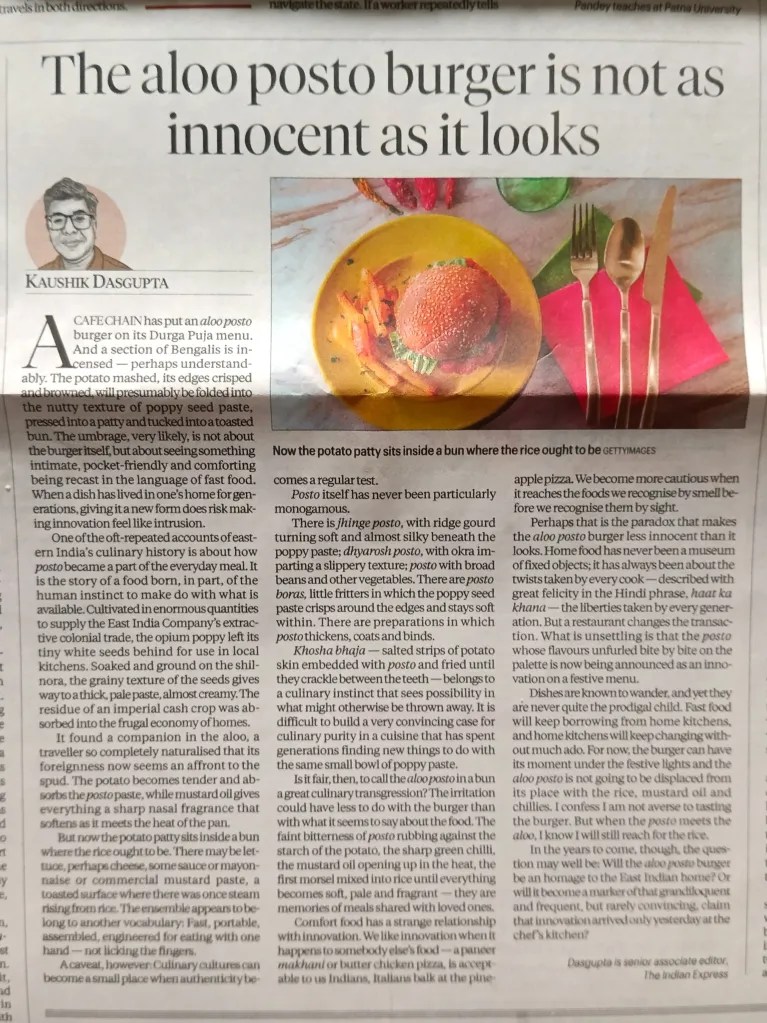
It seems a long time back & there’s been a relentless upward march making us nervous.  Tough to comprehend, exchange rate moved from 45 in mid 2000 to 95  & may still rise.  As of May 2026, the Rupee has faced intense pressure, trading near record lows, with geopolitical tensions affecting the global oil prices and driving capital outflows. Indian Express writes in its Editorial of 6th May, about the manifold ways it hits the economy.  

Thanks to wide dissemination of information through various sources , we know that a weakening Rupee (or depreciation) generally hurts our economy by increasing imported inflation (especially for oil and electronics), raising foreign education and travel costs, and squeezing industries reliant on imported raw materials. As India imports over 80% of its crude oil and significant raw materials, a weaker rupee makes these items costlier, driving up fuel prices and everyday household goods. Electronic items (laptops, smart -phones) & raw materials become more expensive, leading to higher consumer prices.

Conversely, it boosts our export-oriented sectors like IT and pharma, as their foreign earnings translate into more rupees, improving margins. It also increases rupee returns for NRI remittances. But the ‘pros’ are outweighed by too many cons – Foreign Portfolio Investors (FPIs) often pull money out during a rapid depreciation, leading to volatility and potential dips in the equity market. Companies with large foreign debt face higher repayment burdens. As the Indian Express heading says ‘it points to challenges ahead’ !

For us Senior Citizens, there are no plans to travel overseas or send our adult children abroad to study but we all have to contend with the rapidly rising cost of living, medicines, medical treatment and domestic travel. Most importantly, for the aspiring Gen Next and the average ‘Aam’ citizens, they can hope to sing the old song‘..Sabse Bada Rupaiya’ again but maybe not so soon, if the present uncertainty persists !  

‘Chiraiya’ Web Series 

 & Amazing Divya Dutta

(Watch on Jio Hotstar)

Of late we’ve been savoring the qualitative growth shown by OTT films & some of the Web Series that have been made on a variety of out-of-box, thought-provoking and contemporary social subjects that are often bold and hard-hitting. Many class actors have remained under-rated and relegated to side roles in mainstream Bollywood films and its the versatile OTT that’s brought out the plethora of talent that exists, actors who are now proving their mettle in meaningful roles that are age-suited and portraying real-life, relatable characters in contrast to ‘larger than life’ reels created. Like Divya Dutta !

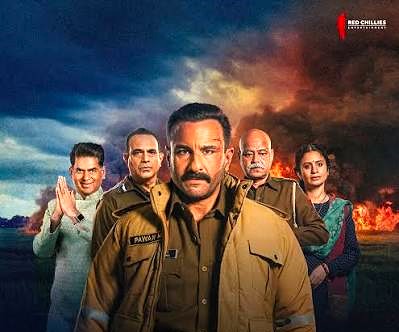
Watching the 6-Episode Web-serial ‘Chiraiya’ brilliantly directed by Shashant Shah, in one binge-sitting yesterday, I was absolutely blown over by the standout performance from Divya Dutta. She lives the role of ‘Kamlesh’, a less educated, mid-aged house-wife in a patriarchal joint family set-up in Lucknow, imbibed with deep seated traditional values. She has firm convictions of right & wrong and places immense faith in Papaji’s  (the family patriarch) moral preaching and love for her small ‘devar’, like her own son !

The real story unfolds when devar ‘Arun’ gets married to a modern girl who Kamlesh cannot at first accept with her English accent and liberal views but later realizes that its because she feels her hold in the family will be threatened since she’s not well educated. The sister-in-law ‘Pooja’ and Kamlesh have a heart to heart talk, and after the latter is satisfied Pooja means well, she vows to teach her the family ways & protect her always.

Just the morning after the marriage night, Pooja implores Kamlesh that she wishes to return home and later disappears, leaving Kamlesh and family befuddled. Later, on her probing Kamlesh finds out a horrible truth. Her faith & worldview is shattered as she discovers Pooja had been raped by her husband (Arun) on their wedding night and it continued even after she returns to her husband following her parents’ wishes. The story thereafter grimly & slowly explores how marital rape is normalized with the patriarchy’s grip and Kamlesh’s uprising from a compliant family member to a defender of ‘Consent’.

The series is an adaptation of the Bengali web series ‘Sampurna’, but we are reminded of similar themes in films (like ‘Damini’, ‘Pink’, ‘Thappad’) but here’s a bold, gritty take on the issue of marital rape, not discussed openly or covered by any law as yet. We may not be satisfied with film’s ending and why a modern day girl didn’t show more fight. The actors play their parts with great sincerity but the real star here is ‘Diyya Dutta’ – I rate her performance as ‘superlative’ at par with the likes of Shefali Shah and Vidya Balan.    

‘High Noon’

(Watch on U-Tube)

The 1971 film Mera Gaon Mera Desh’  was then widely considered a Bollywood “dacoit western” that was heavily inspired by the themes of Hollywood westerns, including elements reminiscent of a classic film High Noon’ (1952) starring Gary Cooper. The Hindi film was considered a major precursor to Sholay (1975), featuring a similar plot of one man (Dharmendra) standing alone and defending a village from ruthless attackers.  

So let’s look at the story of that original vintage western “High Noon’ that won several Oscars and is considered one of the finest films ever made. In a small town, it’s Marshall (in charge of maintaining law and order), who’s newly married, is planning to retire and settle down to a quiet, peaceful life of domesticity. However, news spreads that a vicious outlaw whom he had sent to prison, has been released and will arrive by the noon train, to be joined his younger brother and others of his gang.

Marshall being a man with sense of duty and honor feels that he must stay on to protect the town till the new Marshall arrives to take over. But the rest of the town is petrified and scared that their lives are under threat and despite his urging to come to his aid, everyone flees the town including the Judge who sentenced the bandit, and the Marshall is advised to do the same. His wife gives him an ultimatum that she’d leave without him.  Some people feel that there’s no point in engaging in gunfights with armed bandits while many believe that the Marshall’s fight is not the town’s responsibility. Only very few have the courage to side with him but the Marshall doesn’t want to put them in danger.

When the moment comes, tension mounts in the place that looks like ghost town. As the clock ticks toward noon, left all by himself, the Marshall goes into the street alone to face the bandit and his gang who are fast approaching the town. What follows is a thrilling encounter (with the Marshall getting help from some unexpected quarters)  that must be seen for it’s breath-taking ending – the finale to a battle of courage and high morals.

Why revisit a film that’s pure vintage and more than seven decades old ? Possibly many versions of the inspiring story have been made. Yet art only imitates life and sometimes the oldest stories of relentless courage in the face of huge adversity are reminiscent of the real life battles that we see unfolding before us !

Revisiting ‘Future Shock’

As a young student with a curious mind, one recalls American writer Alfin Toffler’s 1970 bestseller book ‘Future Shock’ as a real revelation, for  the term itself was described as a certain psychological state of individuals and entire societies and a personal perception of “too much change in too short a period of time’. Nearly six decades since then, we have kind of turned shockproof having seen a whole lot of revolutionary changes, driven by huge shifts in technology, politics, socio-cultural values & the dynamics of ‘Power’.

It’s uncanny that a lot of terms now used in context of having ‘POWER’ were familiar to us back in the 1960-70s, because it meant having light or electricity, without which we couldn’t study or work. The biggest setback was if lights failed an evening just before the exam. In times of electricity cuts, candles & emergency lights would be used & life went on. If a prolonged power breakdown occurred during a major event all hell broke loose!

With ‘power’ often playing truant, we were made to realize that it didn’t come cheap and had to be conserved. In the days of frugality and simple living, our parents and teachers set the example to us that fans and lights should be switched off, when not needed, not only in our homes but also in schools, offices and public places. We were sensitized to making the best use of and not waste ‘power’ for there were many in our country, still without it. Today with abundant power we think we have, we don’t care for such small things. Instead we’ve learnt how to easily ‘switch off’ from old friends, jobs and loyalties.

Another thing that was dinned into us was never to be careless while dealing with any appliances that had ‘power’ – a naked wire, a faulty plug or loose connection could give a nasty shock which in severe cases could lead to electrocution. Basic rules were also to carry out such repairs only with gloves & rubber slippers on and if you knew the job. I’ve  always felt that apart from life skills like driving, cooking, swimming, one should know mechanical and electrical odd jobs. Metaphorically speaking ‘POWER’ can get you many things, but ‘shocks’ come to hit you if not prepared to ever lose the ‘Power’ you had..            

Interestingly, much of the terminology that is now associated with ‘Power’ and ‘Powerful leaders ’ has phrases like electrifying presence, high voltage speeches, ‘switched’ over & sent ‘shock waves’ (to the opposition) have all been generously borrowed from Thomas Edison’s invention that brought ‘light’ and shone hope into the lives of people ever after. Therefore, such words are suited to those who work for the well being of fellow humans. 

Pete Hoekstra said ‘Real leadership is leaders recognizing that they serve the people that they lead’. They must set the roadmap and light up the path for others to follow.

‘ASSI’ – Hindi Film

Watch on ‘ZEE 5’

While it’s a brave, new OTT film directed by the undaunted Anubhav Sinha ( known for hard hitting socio-political films like ‘Mulk’, ‘Article 15’ and ‘Thappad’ ), surprisingly it has not created any hype unlike the recent much promoted and highly acclaimed mega blockbuster movie for it’s hyper nationalism and jingoistic patriotism !

This when there is so much talk and chest-thumping for women’s safety, well being and empowerment that all parties are deeply concerned about but have probably skipped the heartbeat of a gut-wrenching film like ‘Assi’ that is a searing indictment of a system that has failed to protect its women across the board in their own cities, towns and villages.    

Ironically, the film’s name is ‘Assi’ (or 80) that depicts the number of rape cases that occur in India every day. It highlights a, “80 per day, every day” statistic, aiming to shed light on the widespread issue of sexual violence and the failure of the justice system.

It’s still commendable that the film has been allowed to be released albeit with ‘A’ rating.  With the rawness and intensely dark contours of our social fabric depicted with courage and sans any gloss, it’s a woman’s gritty fight for justice and dignity, where the cornered victim of a gang rape has her family & work life shattered and must prove her innocence. Such cases are prolonged because credible evidences & witnesses are not available or often the ones obtained are tampered or destroyed by the police authorities in collusion with influential guardians of perpetrators. And social stigma and media trial continues..

The film raises many social and moral issues but none more grave that such crimes are often committed by wards of affluent parents in powerful posts, by youth who are given education often in our so called elite schools. It’s a reflection on a wayward and immoral society that doesn’t nurture its children with the right values as good & upright citizens. The patriarchal mindset in young men must change to respect & take women as equals.

Without divulging the storyline of the film that’s also slow-burn courtroom thriller, it reminded me of two brave films : ‘Insaaf Ka Tarazu’ (1980) & ‘Aaj Ki Awaaz’ (1984) both dealing with violent rape which couldn’t deliver justice to victims and revenge in form of vigilantism becomes an answer. Yet ‘Assi’ deals the subject with realism, sensitivity and an air of helplessness, even from the judiciary which has only circumstantial evidence. 

The film belongs to three brilliant and heart-rending performances – Taapase Pannu as the crusading lawyer fighting for justice, Kani Kusruti as the hapless victim who’s life turns upside down with trauma & Revathi as the reflective Judge on the chair . There are notable performances from Kumud Mishra, Mohd Zeeshan and Manoj Pahwa, A cameo from Naseeruddin was inconsequential, having played many meaty roles with aplomb !  


Lost and Found

The two words that evoke in us unmitigated emotional turmoil in very different ways are ‘Lost’ and ‘Found’. On life’s canvas, an endless search continues as both play their part !

Early in school we start losing things as carefree souls – a handkerchief, tiffin box, pen, pencil, umbrella to books and notes. Then there are tirades from elders for our little blunders : ‘Have you lost your mind !’ to the peremptory : ‘Get lost !’ for a wrong-doing to tragic announcements like ‘We lost our dear Principal today !’  In our time, our school would have a ‘lost and found’ box for sundry items we left behind. Now we are ‘On-line’ savvy, debit/credit cards yet get lost but some often get recovered from a Mall’s desk.

To get anywhere in life, doing well in tests and competitions is essential which means not losing any marks and getting high grades. For achievers, losing the first position in class or coming second in a race is a setback. For the sporty types it is about making up for ‘loss of quick wickets’ after batting first or not losing the clever ‘pass’ just near the goal. We come of age, helplessly ‘losing our heart to someone’ and ‘losing sleep over it’ and ‘being at a loss for words’ describing ‘love’. Yet, we have no ‘love-lost’ for some !

There’s something poignant about ‘loss’ expressed in various forms and this has spurred writers, poets to create classic pieces of literature. Let’s recall Shelley’s lines ‘It’s better to have loved & lost than to have never loved’ and Dicken’s Sydney Carton saying ‘It’s a far far better thing to do..’ before sacrificing his life for one who was the love of the one he loved ! James Hilton’s novel ‘Lost Horizon’ introduced the world to ‘Shangri La’, the utopian state of agelessness and John Milton’s ‘Paradise Lost’ an epic poem that retells the biblical story of the Fall of Man. Then there was also from him ‘Paradise Regained’.

The flip side of ‘lost’ is ‘found’ which lifts our spirits. Imagine the thrill of discovering from the recesses of your old cupboard, what were given up as lost- a priceless 18th Birthday letter from Dad, finding an old classic book, a song recording or a funny shirt gifted years back by the spouse, faded pictures with siblings, old neighbors, school-friends & our children as ‘little kids’. We have excitedly reconnected with those we had lost contact with and revisited places that hold memories of yester years. In forgotten places or even in new locations, we’ve lost bearings but found our way back. This makes us hopeful – for some of what’s lost might come back but in different ways and times.

Sometimes you can feel that you’ve lost something but then at the same time you can discover you’ve actually found or gained something. Life’s untold adventures never cease, those within and without. Only when lost, do we begin to understand ourselves !

‘Poila Boishakh’ with New Year Message

While nothing much has changed since yesterday (except possibly the update on the West-Asia conflict and downward march of the stock markets), but for Bengalis, it is ‘Polia Boishakh’ today and marks the beginning of another ‘Bengali’ year. Coming on the heels of the new financial year and the colourful North-Indian ‘Baisakhi’ festival, its traditionally a festive occasion of Bengal but people all over also celebrate with fervour.

The iconic song by Gurudev Tagore – ‘Esho hey Boishakh, esho esho sho..’ ushering in the Bengali New Year, reverberates during the day with different cultural flavours in homes and social gatherings. People send messages or call out each other to exchange a hearty ‘Shubho Naboborsho’ ! Sharing warm wishes, lively songs and pics in colourful kurtas and red-bordered ‘tat’sarees and partaking ‘Bong’ sweets and delicacies, spirits are auto-lifted and smiles restored even if  for a day ! 

Apart from the festivities, another way of looking at the ‘New Year’ is like opening a brand new book whose pages are as yet blank or a new innings where every player starts with a zero on the scoreboard. We all, irrespective of our form of expression, can put inspiring and heart-warming words and life stories and lessons in them ourselves and share them with others with whom we come in contact with.  We can fill the book with tales and memoirs of real life heroes who overcame adversities and innovators who thought of ways of tackling unprecedented new problems as per the need of the hour.

‘There is always light at the end of the tunnel’ can be an overriding thought. The geo-political scenario may be tough and unpredictable but the resolve to ‘resolve’ must be high. ‘Poila Boisakh’ can revive spirits – ‘It’s start of a New Day and another New Year’ !    

Jane Kahan Gaye Woh Dost

When I was in my early 40s, I spent a lot of time with my parents as I was posted in my hometown, Lucknow for a few years. My Dad played the doting Grand-Dad to my two sons. He was the vibrant, cheerful septuagenarian, playing cricket with them and being their friend, story-teller and guide. Time moved on also I did to another posting. In my later interactions, there was a profound change in Dad’s disposition. He felt a sense of  loss & inevitability. His friends of decades, were leaving having played their innings ! 

More than two decades later, we in our 70s are on the same cross roads. Old memories and friends matter much, as we see the world fleeting by & transforming with alacrity. Losing old friends, especially those who felt like family as we reconnected again, is a profound and often quiet form of grief that can feel as painful as a breakup. When old friends leave “forever”- it is a difficult transition that often involves losing witnesses to our life story. I understand now what Dad had felt then, as we face this cycle of life.

As professional bankers we were used to due dates and maturity being fixed & known in advance. But it doesn’t quite work like that in real life where only the birth date remains unchanged. Studies on the average human life span are holistic with no guarantees of individual performance. The Bard had profoundly said ‘Life is a Walking Shadow..’ to mean that human existence is brief, fleeting and lacks substance. Despite the experience we’ve gained, its tough to accept our fallibility and unpredictability of ‘what lies ahead’.  

Having said that, there’s the resilient part of us that navigates the painful loss of friends realizing that sometimes friends and some loved ones are only meant to be part of your story, for a season, not the entire book. Write down good memories and lessons learned from the dear departed to honor the past while accepting that the present has changed.  The goal is to reach a point where you can look back at the good times with the friends who left us with fondness, while appreciating our own life and those we have as of now. 

Finally, here’s another thought – just as eagles fly alone, sometimes, being with yourself with your strong belief system means, you are meant to grow stronger on your own !

The Greatest Ever All Rounder

It’s always so good to start the day on a high note – it can be a call, letter, message or a newspaper piece that hits your eye. Today, it was a lovely write-up from the ‘Speaking Tree’ section in ‘TOI’ that extols the extraordinary virtues and strengths of my favorite Super-hero, ‘Hanuman ji’, in the most simple language that every youth should read ! In  our religiosity and faith that we’ve imbibed since our childhood & lessons in folklore learnt through cultural upbringing, there’s been an invincible side to HIM in our Epics !

However, in a more modern context of say, the panoramic IPL cricket that’s taken over our sporting world, other learnings from ‘Hanumanji’ could be of a perfect ‘Team Man’ who never questions the Captain or Leader on his decisions yet contributes in the battle in most innovative ways making him the greatest ever all rounder. He could fit into any role, infinitely big or inscrutably small but would be up to the task given, never claiming any credit. The ‘Deity’ assumes human forms as inspired people rise to the occasion !