Traveller’s Tune – ‘Musafir Hoon Yaaron’

The 1970-80s was also known as Bollywood’s ‘golden era’ because of the richness of quality and class of the films produced, actors and music composers of those times and early 70s was when we were mature enough to appreciate artistic content and creativity.     

In 1972, the film ‘Parichay’ was made by Gulzar as an Indianised adaptation of the old classic ‘Sound of Music’ with the main lead of ‘Maria’ (played by Julie Andrews) reprised by Jeetendra, in one his best ever performances. Naturally, music played a vital part in the film’s storyline and writer Gulzar combined his artistry with the musical genius of RD Burman, his old friend. It met with resounding success and songs became super hits.

Among the many beautiful numbers was one iconic song ‘Musafir Hoon Yaaron..’ The situation was to depict travel with no destination, picturised on the ‘out of work’ hero who was without roots. But there is a fascinating story behind the making of the song.  This is based on the accounts given by singer, Amit Kumar in one of his talk shows !

It’s said that Gulzar, also producer of the film, was getting very impatient as RD wasn’t coming up with the right composition.The former managed to catch RD one evening and prevailed upon him to anyhow finalise the tune then and there. The song was eventually conceived while RD and Gulzar were actually traveling to Bombay. During the course of the journey, this piece of melody evolved through their animated discussions, but it took the entire night for the song to get its full form ! The singer was naturally Kishore Da !

In his chats Amit Kumar also explained how RD had created special musical sounds to give the effect of  a horse’s hoof beats since the hero sings while travelling on a ‘tonga’ ! What we get to hear is a perfect pitch for a philosophical journey in to the unknown… That’s how those legendary writers and composers gave us such memorable creations !    

Hats Off and On

We often say ‘Hat’s Off to You’ in appreciation or adulation for some good work done. It’s akin to congratulating another, and had originated from ancient times as hats have been in vogue since times immemorial. Taking the hat off was a mark of respect and acknowledging another. The ‘hat family’ history is long and quaint – head coverings throughout history and the world over carried religious or ceremonial significance.

Hats would convey hierarchy, social status or military rank. In the military, hats may denote the nationality, branch of service, rank or regiment and each service has their own colours & emblems. Police personnel typically wear distinctive ones, peaked caps, police hats or brimmed hats as worn by American cops. The greatest variety of head gear styled for famed, iconic stars, must come from glamour world of fashion and is closely followed by the sporting fraternity specially in cricket & tennis that’s played outdoors.  Wily politicians ‘wear (not one but) many hats’ to identify with the ethos & the place ! 

Typically for us ‘hats’ have a colonial connotation in that the British would wear them as customary head-wear whilst with our colourful diversity and ethnic roots the same had  many forms, often dictated by the weather conditions. The turban referred to as a pagri, is worn by men and is manually tied. The styles are specific to the wearer’s region or religion. For instance, the religious Sikh turban is called ‘Dastar’ but in Rajasthan, the Pagri is called ‘Safa’, and is traditionally an integral part of the state’s cultural identity. 

The urban Indian women, educated & working millennial, has adopted modern attires and styles. Yet the head coverings are relatively common among those in the hinterland and traditionally, married ladies put on a ‘pallu’. It is estimated about half the women keep the practice of covering their heads outside of their homes. That said, fashionable scarves, hoods and head-wears also adorn trendy women’s affluent couture. Significant fact is that as per our old customs and beliefs, head should be covered while performing puja or any other auspicious work as it helps to maintain mental peace and attention.

The head covering plays a vital role when facing the scorching summer heat as it does in protecting one from the extreme winter chill. Apart from making a fashion statement, one chooses head wear appropriate to seasons. In winters Bongs go for ‘monkey caps’ covering the ears while people in ‘coldest’ North use fur caps, masks and ‘balaclavas’ !

Today the most essential life-saving head-gear, is the ‘helmet’ for the drivers of mo-bikes & two-wheelers on roads at great speeds. Most cities have made it mandatory even for pillion riders yet the most unfortunate accidents happen. For construction & on-site workers it is an absolute must ! In Cricket the batters (and close in fielders ) are advised to wear helmets to avoid serious head injuries as it for goal-keepers on a hockey field.

Not everyone looks great with a hat on, yet head wear have their style, utility and importance.  As Christian Dior, the fashion great, said ‘Without hats, there is no civilization’. True !     


Musings on a Starry IPL Night

The IPL Finals was expected to be the mother of all battles and hyped as the ‘clash of the titans’ of this year’s IPL’s two month long festive extravaganza, but ironically ended as an anti-climax of epic proportions, that felt like all the super-fizz gone out of the giant ‘cola’ that was the ‘Sunrisers’ H team, which had played astonishingly till the evening ! Such was the domination of a fired up KKR bunch that the match was over in half the time, for their batters it was a mere walk in the park with about ten overs to spare.

This caught everyone off guard (for records SRH posted lowest ever IPL Final total to be chased !), the organizers took ages to set the stage for the ‘Presentation Ceremony’ in their valiant efforts to reassemble BCCI biggies on the podium to hand out the IPL trophy/awards to the winners ! By midnight, the long wait had commentators running out of subjects but the media guys had a field day as King Khan and family, other team owners and their entourage did the celebratory gestures, flying kisses and victory laps. For audiences worldwide it was a toss up between switching off the TV and sleeping or wait for Harsha or Ravi to start the awards function proceedings.

So in waiting I imagined that in a celestial world, two great writers (presumably cricket lovers) were discussing the ‘Tale of Two IPL Teams’ with Charles (Dickens) expressing sadness over SRH’s plight while William (Shakespeare) extolled the rout by KKR …

In his style Charles might have reflected :

‘It was a far far poor score, That SRH ever in IPL made

It was a far below par show, That SRH ever dreamed of..’

To this William, a KKR loyalist would state :

‘There was a tide in games of KKR, Which when played in the Finals

 Led to a great win and fortune…’     

It was left to Charles to sum up the Finals :

‘It was the best of times for KKR, It was the worst of times for SRH,

 It was an evening of hits for KKR, It was a night of misses for SRH,

 It was a stadium of hope for KKR, It was ‘Chepauk’ of despair for SRH’

The  Genial Associate

Among many lively taglines that creative ads conceived of in last few years. was an old favourite ’Har Ek Friend Jaroori Hota Hai’ or that every friend is important in life. Yet, too many ‘friends’ can be a pain as rich & successful people realize, when ‘new’ ones can spring up like wild flowers to befreind them ! Earlier, we had a ‘best friend’ syndrome, one to whom you felt closest to, but time taught us, friends are just ‘a few good men’ !

On the other hand, famous story-tellers, writers and spinners of film yarns, created that truly special character alongside their main heroes, who played important roles albeit with an understated, genial disposition akin to that of a loyal assistant. The Greatest fictional detective, Sherlock Holmes had Dr.Watson to bounce off his theories on, while the fastidious but brilliant Hercule Poirot liked to have Capt. Hastings as an aide.

In helping them solving curious cases, these amiable ‘associates’ bore the brunt of their eccentricities and quirks (somewhat like what an enduring spouse does !), yet never lost patience like foot soldiers. Closer home, legendary Satyajit Ray’s ace detective ‘Pheluda’ however, had a budding ‘Topse’ as his understudy, which Bengali audiences know from classics like ‘Sonar Kella’ and ‘Joy Baba Phelunath’ and the entire ‘Pheluda’ series.

My favourite of this genre was Col Pickering of ‘My Fair Lady’ fame. A lovable ‘old chap’ on whom the indefatigable Henry Higgins would let off steam uttering expletives such as  ‘never let a woman in your life’ and ‘why can’t a woman be more like you ?’. As their friendship was deep, the loyal Pickering with stoic calmness, assisted Higgins in his mad efforts to transform wild ‘Eliza’ into a proper lady. Let’s remember that such guys were no pushovers, but gentlemen with no egos and reliable friends for all times !

With all this happening in the world of English literature, how could Bollywood be left behind. Even with Saratchandra’s tragic ‘Devdas’ was effervescent Chunilal for company and in almost all movies of 1960-70s, the film’s hero would’ve a sidekick for comic relief. Roles were written for fine actors like Johny Walker, Mehmood, Rajendranath, Asrani etc – there were times when they would steal the show ! Later when lead actors (read Big B, Govinda, SRK etc) delved into comedy, the funny sidekick kind of got lost in crowds.    

Today, the noble, enduring essence of a friendship that plays second fiddle to another person’s eminence or success has been replaced by opportunism and sycophancy where everyone wants a slice of the cake or a place in the spotlight and for that people resort to ‘networking’ & connections rather than maintain relationships with no strings attached. The genteel era of associates ’Watson’ and ’Hastings’ is passé. It’s what it was – fiction !

The Original and the Remake

It is well known that language is no barrier for music lovers and this inner create urge to expand the horizons to all corners, composers of beautiful tunes have not only created memorable songs for posterity but also ensured legion of ardent fans derive joy of the composition in their own language.

‘Borne Gondhe Chande Gitite…’ is a vintage super hit romantic song that Bengalis who follow classics in musical numbers of 1960-70s, often sing. The singer was the composer & musical genius, legendary  SD Burman also known as ‘Dada Burman’ of Bengali and Hindi film world. As the amazing story goes, the lyrics of this song were written by none other than Mira Dev Burman, very gifted better half of Dada and that SD had composed this evergreen song as a ‘Pujor Sankha’ in his music album released in 1969 !

Later Dada, a ‘Navketan’ favourite was composing music for Dev Anand’s film ‘Prem Pujari’ (1970) and used the basic tune of ‘Borne Gondhe..’ to create an equally beautiful song which was suitably modified to suit Dev’s suave persona. In keeping with tradition already set earlier, the playback for the song for Dev came from Kishore Kumar, who memorably rendered it with his incomparable flavor of romance, nostalgia and hope ! Today, the song ‘Phoolon Ke Rang Se..’ is as fresh & uplifting as it was 54 years ago ! 

‘Dushman’ Story Revisited

In 1971, actor Rajesh Khanna, (on road to becoming a superstar called the ‘Phenomenon’ by film media) enacted a different role in ‘Dushman’ which received critical acclaim for its powerful theme. Directed by Dulal Guha it had legendary actress Meena Kumari in a pivotal stellar role while Mumtaz played the romantic pair opposite RK with aplomb as she always did. Yet it was Khanna who was memorable in portrayal as the repentant truck driver. Why talk about a vintage film after so many years. Let’s look at the story…

Here was an out of the box theme on the subject of differentiating law and justice. A rash and reckless truck driver in an inebriated state runs over a man in an accident in a village and is arrested by the locals and tried in court. In a far cry from normal jurisprudence and as a revolutionary social experiment the Judge proposes to Judges bench that the accused should spend two years in the village to take care of the family members of the person who got killed by accident, which comprise of his old Father, wife, sister and young son. The riveting tale is about how the family and village at large, copes with the judgement that’s unpalatable to all of them !

If the story rings a bell, it’s eerily akin to the horrific road accident in Pune that snuffed out the lives of two young techies crushed under the recklessly wayward wheels of a luxury car driven by a inebriated delinquent youth. To add to people’s outrage was the near immediate bail granted to ‘juvenile’ driver and his two friends that reeks of entitlement that comes to affluent. As redemption, the juvenile court has asked the accused to write a 300 page essay on how to avoid road accidents and tasks that are kind of punishment to errant school student, not for heinous negligence resulting in two deaths. 

What the fictional Judge in ‘Dushman’ proposed was a major socio-legal experiment that stressed on reformation of delinquents but by undertaking all the responsibilities of the bereaved family & that was plausible in a way. In the Pune road accident case, what appears is the kind of cover-up and machinations that are set in motion to protect rich-brats who are a threat to society. Most stringent action needs to be initiated against them and those responsible for such an upbringing that breeds a flagrant defiance of civil society norms and exposes people on the streets. That is order of the day ! 

The Old World Letter-Writers

It seems like ages since we last wrote or received a hand-written letter. In this digital age it is so easy to stay connected with people – like a pervasive genie unleashed with digital revolution, we’ve now got friends on FB, send emails to bosses & co-workers and post short ‘stay-well’ messages to elderly parents/relatives and tweet at celebrities and politicians.

Yet ask anyone past middle-age and there’s warm nostalgia that surrounds letters.Many of us preserve old ones we can lay hands on, like mementos ! In these we try to keep alive the personal touch of the writer. Till the 1980’s parents would get worried if you didn’t send them a postcard (or made STD calls) every other week ! Today the humble ‘letter’ in own handwriting as  form of communication is slowly becoming extinct, barring official letters that need be sent by post. Why write, rather chat for hours on WhatsApp !

Looking back, most of us won’t recall the first letter we wrote. I suspect it would’ve been in school as an English lesson where basics of letter-writing were taught and class tests were given to elicit model answers. Simple as it sounded, teachers would point out many errors in our drafts. A good letter had to be clear, organized in paras with apt words that were to the point. It was a writing skill that had to be perfected through constant practice.

As children, conveying respect or affection to elders & relatives on festivals by penning letters to them, was a ritual followed meticulously. Also, it was imperative we stayed in touch with each other when out of town and letters were means to convey information, one’s experiences and thoughts. We still recall our parent’s vivid hand-written accounts of travels across Scotland, Norway and exotic destinations, that seemed as if they were speaking to us.

Confiding innermost thoughts via letters to dear friends was much in vogue then, specially where matters of the heart and heartbreaks were concerned. In poignant times too, letters brought solace. When my close friend’s father died we were in school itself and I penned a heartfelt note on his loss which moved my Dad to tears. Historically, writing came naturally to our family !   

Often help of those who had greater fluency in writing were enlisted to draft special letters. I once helped a close friend in composing his first love-note to his fiancé which met with much appreciation. Later she discovered that he’d used a shadow writer but laughed it off for his overall good intentions.         

Busy schedules, time pressures often prevent us from writing and simply calling and chatting. Yet, social letters can be fun, therapeutic, and can have a much deeper meaning to the recipient than a boring old email. So what if it takes a little bit longer than a digital message ? It is so exciting to receive a letter in reply that reciprocates our feelings and isn’t a bill or a reminder !

Samosa’s on My Plate !

One very happening chat show of late, has a smart young lady quizzing a celebrity (actors, cricketers, netas) over breakfast about their favorite cuisines and predictably the Mumbaikar’s pledge their undying allegiance to the quintessential ‘Vada Pav’ (and it’s variations), Delhiwalas swear by ‘Old Delhi’s Chole Bature’ and Bongs love ‘Phuchkas’ and ‘Maacher Fry’etc. We don’t qualify as celebrities and no one interviews us but we foodies are survivors through generations. Ministry of kitchen and home affairs is sharp being very familiar with old ‘palate’ weaknesses. All required restrictions are put in all homes on ‘Senior’ gents. Culinary delights are reserved for guests & celebratory events !

Like everything one gets attached to but can’t always have in life, the poignant part of nostalgia for our home-town Lucknow will remain the crispy, yummy ‘samosas’ that have their distinct flavour & crunchiness ! They even come in different sizes and fillings and can easily claim to be the most popular snack in the City of Nawabs ! In India and abroad, cosmopolitan cities have their ‘samosa’ versions but for people like us who are reasonably biased for all things Lucknowi, none can curl, fry a samosa like they do there since times immemorial, but the history of the great samosa is fascinating as its taste !    

Research reveals that the snack SAMOSA probably travelled to India along ancient trade routes from Central Asia. Small, crisp mince-filled triangles that were easy to make around the campfire during night halts, then conveniently packed into saddlebags as snacks for next day’s journey. By the early 14th Century, it was not only a part of Indian cuisine but also food fit for a king. The samosa obtained a royal stamp with its inclusion in the Ain-i-Akbari which declared that among dishes cooked with wheat there is qutab, “which people of Hind called the sanbusa“.

Indian samosas are usually vegetarian, and often accompanied by a mint sauce (raita) or chutney and originated in Uttar Pradesh.The current day samosas are small, crispy, flaky pastries that are usually deep-fried. They are stuffed with an assortment of fillings ranging from minced meat with herbs and spices to vegetables such as cauliflower and potatoes. The Bengali type samosas have flavour different from the North – they are filled with sweetened reduced milk that go straight from the frying pan to a syrup wash.

It is very rare that one finds a good samosa-maker in the family (not having married into ‘halwais’ ) but I have been distinctly fortunate that forty four years ago I came across a lady with samosa magic in her hands ! Despite being away from Lucknow, I have not felt samosa-deprived because my octogenarian Mother-in-law, Mrs. Roma Basu, can create yummy samosas even today, albeit with the capable assistance and support from her daughter. When the fun days come, we have our own show – ‘Samosas on My Plate’ !

The ‘Super-Giants’ Redemption

When it came to the final crunch in the last stages of the IPL, the somewhat beleaguered Lucknow boys, scarred by the ignominy of a 10-wicket defeat and heart-breaking 4 losses on the trot till this match, delivered a brilliant all round show on a rain-interrupted night to leave on happier note, though  not qualifying for play-offs having lowest run-rate among other contenders. For the fancied Mumbai Indians and it’s newly anointed skipper, Hardik, it was a highly forgettable IPL season, where nothing really clicked for them.

For the LSG fans the innings started with a disastrous opening partnership & pretty sluggish power-play and just when it seemed that a repeat of their earlier displays was on cards, in walked lithe and pumped up Pooran, to lift the team with an awesome display of power-hitting, that not only swung the tide in LSG favour but empowered KL Rahul to show his aggressive intent. Nice cameos in the end came from Badoni & Krunal. The fielders deserved a mention – a leaping Krunal saving a sure 6, also saved the match for LSG !     

What is frightening from the T20 World Cup point of view for India is that the burly West Indians of likes Russell, Pooran, Hetmeyer, Powell ( arc of Narine may not play in WC) who’ve entertained us in this IPL will now go back to represent West Indies. Bumrah and our wily spinners will have to invent canny ways to beat the arc of their swinging bats and massive shots ! Hope that after IPL, the WI power hitters leave their form behind in India.

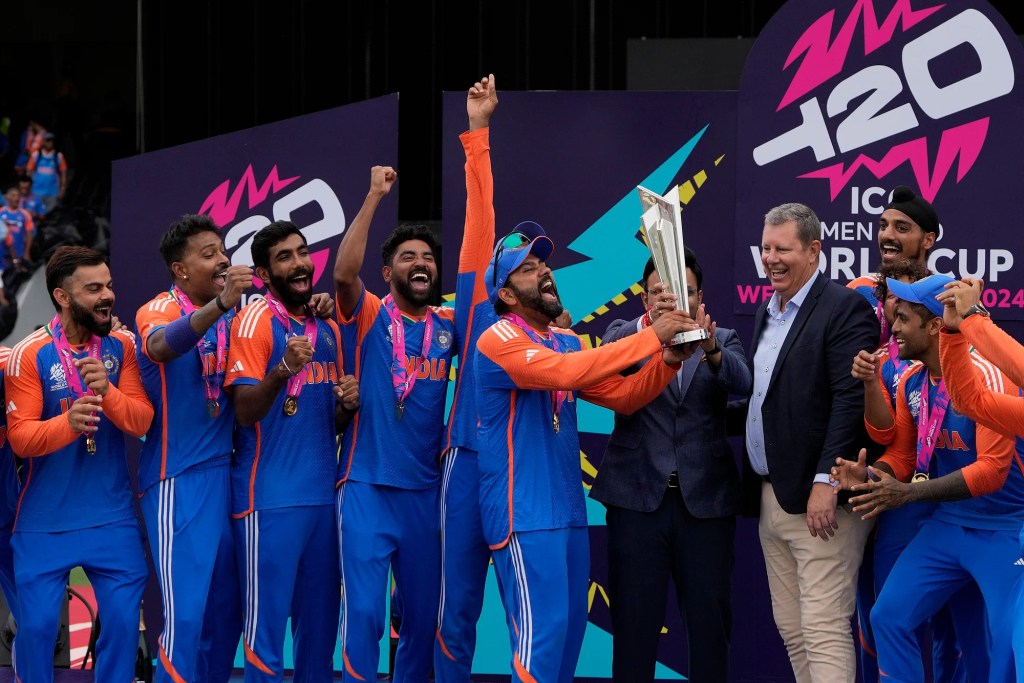
Good news from our camp, King Kohli has hit his ‘purple patch’ and Rohit looked good in yesterday’s game. It’s believed that the ‘Hitman’ is a ‘Big Match’ player. Let’s take another shot at the WC and this time ‘Lift it too’ !   

The ‘Natural Actors’

The fine art of ‘acting’ and the techniques of film making have constantly evolved and transformed beyond recognition since the beginning of motion pictures in 1888. All this is subject of research for those who study & understand the craft of film-making but as audiences become more discerning, the challenge to makers is to innovate and engage with newer themes, contemporary stories and methods of enacting the characters with realism with roles and content which offers a combo that’s  entertaining, exhilarating & educating. In that sense, there is a perceptible shift from big-budget films screened in cinema halls to the OTT offerings of films and web-series of diverse genres.

As seniors we’d connect more with movies of the 1960s-70s that were often based on famous classics and works of great authors and characters that were created by them, played with the passion by renowned actors. I’d cite examples of  ‘Sahib Biwi Ghulam’ (Hindi-1962) and ‘Gone With The Wind’ (English -1939) – outstanding and celebrated films of all times, among hundred others. Great actors then would follow the ‘method acting’ style as opposed to ‘natural’. For a long time, loud melodrama flourished in most films & not just in costume dramas, period films. Actors often got type-cast in certain moulds !   

Recently we caught up with an old film (1966) on OTT, a super-hit for it’s foot-tapping songs, but who’s name shall remain undisclosed, for it may hurt the nostalgic connect it had with 60’s generation. However, we were a bit appalled at the contrived, over the top mannerisms of the popular lead actors, also called ‘hamming’ and what now seems like ‘overacting’ compared to the effortless, natural style we witness with many new actors. Many big stars remained trapped in their image rather than get under skin of the role !

Mature cinema buffs love natural or realistic acting as it involves an actor attempting to portray a character like a real person & not just figment of a writer’s imagination. It tries to accurately and convincingly reflect human actions and emotions and focuses on sensitive and nuanced characterization of characters, frequently drawing inspiration from real-life observations. Since cinema is a medium of the ‘Director’s’ expression, it took likes of  Bimal Roy, Guru Dutt, Hrishikesh Mukherji, Shyam Benegal and Basu Chatterji to create films that had actors who truly became the characters…

Let’s remember that early Bollywood also produced classy actors but stylized acting was much appreciated with popular stars and ‘larger than life’ images were created for them.  The 60s also saw the rise of natural actors like Balraj Sahni and Ashok Kumar (among male actors) while the 70s brought in ‘new wave cinema’ and creative genius of Shyam Benegal with actors Naseer Shah, Om Puri and a host of others. In the last decade we’ve had likes of Irrfan Khan, Manoj Bajpayee, Nawazuddin Siddiqui, Rajkumar Rao & Pankaj Tripathi !

What’s heartening is the newest breed of actors mostly seen on OTT platforms who live the parts they play. It’s said ‘Dramatic ability is a natural gift, that can hardly be taught’ ! But trained, Yes !