The Unbeatable Soumitra Chatterjee

For Indian cricket, the name Sachin is revered God-like (and yes, of a billion dreams !) and in the same vein, for the Bengali films, Uttam Kumar was ‘Mahanayak’ the ultimate legend whom Kolkata swears by ! But as die-hard fans ( of cricket and Bengali films ) would acknowledge, for sheer consistency, conscientiously cultivated talent and class over several decades, cricket has ‘the wall’ in Rahul Dravid and Bengali films, perhaps with the longest innings ever played, the amazingly gifted and ageless star actor and theatre personality, Soumitra Chatterjee !

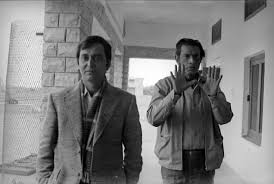
Soumitra Chatterjee is one of the most prolific actors of the Bengali film industry and has worked with legendary director Satyajit Ray on numerous films. His body of work has been widely regarded as a milestone in Bengali cinema. He made his silver screen with the film Apur Sangsar (1959), which was directed by Satyajit Ray. He then went on to act in some of the biggest hits by Ray, including Devi (1960), Teen Kanya (1961), Abhijan (1962), Charulata (1964) and Kapurush (1965).

One of his  memorable  and which I still enjoy with childlike mirth, were performances as the super sleuth ‘Feluda’, a Sherlock Holmes like character created by Satyajit Ray in his wonderful detective series of ‘Sonar Kella’ and ‘Joy Baba Felunath’ ( there are several other films of  Feluda with other actors but none with Soumitra’s suavity !)

After establishing himself as a talented actor, Chatterjee starred in a wide genre of Bengali films like Baghini (1968), Parineeta (1969) and Jiban Saikate (1972). However, his real breakthrough came in the film Devdas (1979), which cemented his reputation as a maverick actor. Thereafter there was never any looking back for the man who worked with great film-makers like Mrinal Sen, Tapan Sinha, Asit Sen and Ajoy Kar but is still best-known for his incomparable work with the master craftsman and tallest cult figure, Satyajit Ray.

In a sort of second innings, Chatterjee collaborated with Satyajit Ray again, this time for classics like Aranyer Din Ratri (1970), Asani Sanket( 1973), ‘Feluda’ series in the 70s, Hirak Rajar Deshe (1980) and Ghare Baire (1984). Following this, Chatterjee also starred in some of last of Ray’s celebrated films, Ganashatru (1989) and Shakha Proshakha (1990) and also few lesser known ones. In one of his interviews Soumitra himself has said of Ray  “..Maybe there was some convergence in our thoughts too. He was a rare genius, I am not close to him by any standards yet I guess there was some parity of thought – the legacy of the Bengali educated middle class, the legacy of Tagore…”

Now, at the age of 83 years, Soumitra is still going strong with his innumerable portrayals of a senior citizen and family patriarch facing the dilemma that today’s elders face with the liberalized modern generation and their changing value-systems and nuclear families. One of his recent Bengali drama films ‘Posto’ is one such poignant story of the undying love and bonding of grandparents with the grandchildren with heart-wrenching consequences.

What can be said about Soumitra Chatterjee’s contribution to Bengali cinema. Most deservedly he has been the winner of the prestigious ‘Dada Saheb Phalke Award’ and many national awards in recognition of his huge body of work. The question one may ask (without sounding blasphemous !), would Ray’s films be the same without Soumitra?
Soumitra and Ray


Repairs and Maintenance

In school, such stirring lines as in poet Henry Longfellow’s “A Song of Life ” ‘…Life is real ! Life is earnest !…’ exhorted us that you have only one life in the here and now, so make the most of it. But modern day lifestyles extol more on the lines of – life is mending, life is repairing, life is upgrading ! It’s not just about fixing impaired alliances, broken hearts, college admissions, new tax laws and dwindling investment returns or avoiding the unending potholes but maintaining what you still have !

To come straight to the matter’s crux, during the last few months, three fourths of our family time has been invested in hardware repairs and maintenance with the assistance of a variety of specialists –setting right the problems ailing the almirah locks and knobs, falling clothes line, bulbs, geezers and ACs to debugging the laptop, replacing the desktop monitor and getting rid of archaic cable-wala in favour of a new Tata Sky connection were the high-points. However, a formidable list remains to be attended – the leaking roof and the broken tiles in the sitting room ! This is not to underestimate the power of Mumbai traffic snarls and the  intrepid mobikes/autos to dent the car at least on weekly basis and regular repair visits to neighbor-hood mechanic who smiles ironically at the poor vehicle !

Coming to other issues of mundane nature but vital in importance, the usual monthly house maintenance, electricity, gas, mobile bills and Home Loan EMIs which all civilized people meet through ECS or on-line but aren’t there also dozens hounding you for new credit cards, travel schemes, home/car loans and club memberships while retired folks ( like me) receive offers on phones to earn by becoming insurance salesman . Skillfully yet patiently avoiding these traps is needed to maintain sanity !

With fixed deposit rates now plummeting to unprecedented depths, the average house-man (or lady) has to relook his portfolios and seek market advice on how to frugally maintain the depressed looking incomes.

In meeting all these challenges, what remains overlooked is maintaining  the physical self – what then of the morning walks, visits to the gym, low calorie diets and no fried stuff and eateries ? With such pressures and demands on your time, it’s likely that you’d rewrite the famous lines – ‘What is this life, if full of care – we fill our hours to mend and repair !’

Road Repairs


Making Choices and the ‘Toss’ of Life

Sports like everything else in life faces the challenging dynamics of change . Take the recent proposals in the cricketing world for doing away with the most important first reel of a cricket match ‘the toss’ or the flick of the coin to determine which team has the right to choose to bat or field first.Since there is another version of the ‘toss’ in other sports like tennis and badminton which is not facing any removal, why is toss so vital in the game of cricket ?

As the buffs will understand, in cricket the pitch conditions have a bearing on how the ball will swing/move/bounce and turn to the detriment or benefit of the team batting first. The home-team always has the distinct advantage of preparing the pitch to suit its players and to negate this, it was proposed by ICC officials, that the visiting team would have the choice ( to bat or field first) and the toss became redundant in that case. Deliberations by the Committee appointed by ICC has opined that the ‘toss’ remains an integral part of cricket’s game of ‘glorious uncertainties’ and adds that bit of suspense and agility of the teams and its players to adjust to conditions, often to expect the unexpected and learn to cope with it.

Extending this to the broader canvas of life, management gurus have conceptualized it into the ‘choices’ that one must take (right from Lord Krishna’s epic exhortation to Arjun on the battlefield !). As all of us have experienced, to make the right choice is uncertain but not making a choice is risky, for chances and opportunities lost may not fall our way again. The elements of risk-taking abilities start playing a role but as fund-managers of mutual funds always advise – study, spread and balance your risks. They add, however, that more risk will also fetch more returns !

Some whom we may call adventurers (and reckless ?) are the ones who love quick bucks, job changes, flashy cars, stock market booms, adventure sports and risks of a life in fast lane ! There are others fearful of making changes or committing mistakes, preferring to stay close to what is familiar and not wandering too far and that includes their choices and decisions.

Today, one would have imagined that the progeny of the average, middle-class parents would grow up to be conservative, austere and reticent in their attitudes. However, modern living brewing in a multi-cultural ethos of big cities is throwing up huge surprises catching old traditions and elders off guard. The liberal socio-economic environment and sense of freedom is making our youth just dive into life and do what they feel is right with enthusiasm and excitement, while two decades ago they would have many reservations at the thought of having to step up to anything that might require taking bold action.

At times, the fault lies with parents who try to control too much of their children’s early lives and actions fearing that they will miss out on what the parents, deem to be important unless they chart the proper course for them. Often this later takes the form of rebellion and expression of new found freedom – doing the exact opposite of what the parents wanted.Despite their well–meaning moves, parents have to retract at some stage.

At the end of the day, decision-making is something we all need to learn how to do. More importantly, it has to be taught from very early on since decision-making takes years of practice and the developing right attitudes towards taking responsibilities for one own actions. Learning how to make good choices and wise decisions is not included in school curriculum –they form part of life’s experiences and in owning up to the mistakes made !

Courage

What a Superb 102 Not Out !

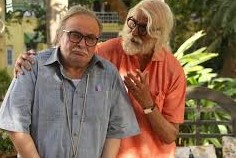
Sometimes it just needs two players in a great partnership to string a memorable match-winning innings together – that’s exactly what the film ‘102 Not Out’ does, sans big sets, histrionics, fights, romance and the biggest surprise – no leading lady ( not even in the flashbacks ) !

What makes it work hugely is the sparkling screenplay ( somewhat in the nature of a two-act play),witty dialogues, hilarious situational comic scenes, a fresh musical score but above all, the  incredibly stunning performances by two versatile, veteran actors like Amitabh Bachchan and Rishi Kapoor (not to forget the lovely cameo of a third character, played by a young Jimit Trivedi with the right amount of awe and innocence ! ) .

Big B is absolutely marvelous as he revels in another remarkable role ( after ‘Piku’ and ‘Pink’ ) this time of a 100+ quintessential character, a happy prankster,  who’s perennially young-hearted and loves to spread good cheer all around but more specially to rejuvenate the life of his 75 year old, irascible son. In fact, Bachchan Sir does an ‘Anand’ (Hrishikesh Mukherji’s old classic of the 70s) here as he breathes life and joy and lights up the screen as he enters, countering all the despondency that comes with old age, sickness and inevitable loneliness that surrounds it.

Rishi Kapoor, as the disgruntled son who has accepted the futility of an old man’s existence, proves to be the perfect foil to his boisterous and chirpy Dad who’s always out to test his patience. In a heart-rending turn of events his character resurrects itself again and this Rishi does so effortlessly with all its nuances and poignancy of coming to terms with harsh realities of life.

It would be difficult to conceive of an appropriate end to such a fine inspirational father-son tale – yet what pleased many like me, was how the film leaves you with feel-good thoughts laced with a bit of poetic justice ! But to reveal that, would be depriving others of 100 minutes of happiness !

102 Not Out

The Morning Walk, Eat and Talk

One of my favourite lines (specially for those in positions of authority and power ) is to ‘Walk the Talk’ which is newer way to extol ‘Practice what you Preach’. Apart from many issues that are moral, spiritual and philosophical, this applies as much to physical exercise and the virtues of early ‘morning walk’ which are widely accepted but not followed in true letter and spirit !

While for the happening younger set it‘s the in-thing to sweat and work-out (or pump iron for the seriously physique-conscious !) in a gym that has cool ambience and modern equipments, health-conscious ‘aam-aadmi/aurat’ in almost all our cities are seen thronging the streets and parks for an early morning jog and then switching over to office-gear to catch 8 am bus/train !

Why is the ‘morning walk’ so highly rated as the best ( and the cheapest ?) form of physical exercise apart from the wonders it’s supposed to do to our hearts ? Research proves that numerous benefits accrue – Walking gives you energy for the rest of the day, it’s motivating and removes the “I’ll do it later” excuse, creates a positive mindset for other important activities, gives you time to plan out the day and yes, it ‘magically’ promotes weight loss !

Very importantly, as I’ve discovered during my daily outings, walking in the morning has many social benefits too. Several groups of like-minded people of different age-groups converge at a common dhaba/tea stall and talk animatedly on all subjects under the soft morning sun, over tea and ‘snacks/phafda/phuckas..’. The biggest beneficiaries of morning sojourns appear to be the happy looking, grey haired men’s group (read retired !) who seem to having the time of their lives. They may or may not be part of a ‘Laughter Club’ but have their own stock of morning jokes to relate !

In fact, one of my friends (from senior citizen’s category) is part of a group which meets every Sunday morning in a well-known park to enjoy breakfast goodies pooled in by the members. It’s lot of fun and talk and a little walk !

Morning Walk


Daddy Not So Cool

The pics becoming viral of a ‘Captain Cool’ MS Dhoni merrily playing with his little daughter, while the ‘CSK’ team was busy celebrating their IPL victory, has now earned him the sobriquet ‘Daddy Cool’ and more fans, who are looking at the human side of a battle-scattered veteran of historic wins !

Are young men of today more committed, sincere and demonstrative as caring Dads compared to us, who have grown ups as children and to our own  fathers and their fathers of that Victorian era when the well-accepted generation gap existed where one spoke to them only when spoken to ?! What appears is a connect getting established and the small family size is helping.

The young Dads of the 60s were working men ( with fewer working mothers) with large families and live-in parents. Life’s daily struggle often made them exhausted, underpaid and frustrated, worrying about their meager salaries and keeping quiet about their own anxieties so that the rest of the family would have a better life.

Speaking of my Dad, I now realize that despite his love, becoming friends was not usual in those days, but he passed on to us through his exemplary, simple life-style, many of life’s beautiful pursuits like music, literature, films and love for sports and most importantly, being a ‘good human being’ was the lesson he inculcated in all of us.

With time, demographic changes, rapid technology, healthcare, living standards, education system and life-styles have seen huge transformation. But ‘Dads’ who were considered a source of inspiration and fountain of knowledge in the 80’s are now becoming old-style and uncool with their archaic technical skills and old-world values. Parents were the mentors two decades back but not any longer, instead their protective cover is a burden and well-meaning advice now seem like impractical homilies which don’t suit the generation which values its freedom more than its responsibilities.

Whatever the age and position, Dads (and Moms) in general, love unconditionally but often do not allow children to understand them well enough to make sense of their actions. Sometimes they make the mistake of attaching an emotional price tag to everything, meaning that progeny’s success is their success, progeny’s failure is their failure – trying to be the judge of what’s right and wrong because Dad ( and Mom) know what’s best. No longer is that going to work with the youth of today.

Researchers think that adults now pay too much attention to their children at the expense of themselves. Dads (Parents) defer their pleasure trips, close off interests or avenues that they formerly pursued that made them fuller and more interesting people. Being totally focused on the children makes them lose their identities, lowers self-esteem when discarded by them later, struggling to rediscover what’s left as the ‘nest is empty’.Pa

Up In the World So High

Once upon a time ( not very long ago ) life for a college student was, to use an old cliché, simple to the point of being mundane. For some (like me) real-time started with a 10th Board exam. of HS or High School ( for some others, Board of SC or Senior Cambridge ) to be followed by 12th Board of Intermediate Exams. Those from SC were considered more anglicised and suave – would somehow pass in Hindi while the High School types, being not-so-cool, less likely to score highly in English for strangely obvious reasons, but often faring better in maths and science. But no-one,not even the best, could dream getting anywhere near 90%!

Things would eventually level after college pass-out into the big bad world of competitions comprising basically of two streams – engineering and medical (few even applied to armed forces) while many opted for graduation and post-graduation en-route to appearing for the All-India IAS, Railways, Income Tax, other Allieds or the SBI and PSU banks. Yet another set (financially solid !) moved to the US haven for higher studies.

When one saw/read that Mark Zuckerberg got his degree from Harvard Univ. more than a decade after he’d dropped out to pursue his vision of FB, one reflects that at the end of the day (of professional life), how much do academic results and marks count ! Many of success stories I know are of back-benchers in school, some even notorious pranksters !

Cut to the present and amazingly so many students get 90+% in their board exams and then high percentages result in high cut-offs to get admission in colleges, thereby de-motivating those who could not score well or who score even 80+% marks ( really fabulous in our time !). Should percentage be the only criteria for admissions ? Life is far much more than percentage and degrees but try telling that to eager, ambitious parents and the authorities, in a hugely competitive dog-eat-dog world.

The counter-argument is – this generation is far smarter and earns the high scores through smart prep and professional counseling. Multiple choice answers and objective type tests also enable very high scoring with ‘a little bit of luck’ of-course (like getting the right questions ! )

But is learning and imparting knowledge about success by scoring high – in the good old days, it was all about conceptual clarity and getting the ‘fundas’ right and also about the right values. Many from the old school might even sing sadly today “ Koi Lauta De Mere Bite Hue Din ….”

Exam results


Indian People’s League of Rising Stars

After a marathon 45 days of  T-20 cricket extravaganza, better known as Indian Premier League (IPL), the curtains came down with glittering gusto and fanfare on one of the greatest sporting events of today – the Finals watched by some sixty thousand at the Wankhade stadium in Mumbai and in huge numbers in the many fan-parks specially designed for public viewing on giant-screens and more significantly, the live telecast and related buzz and peppy program contents on Star TV channels, followed by several millions of cricket-loving Indians across the country, all for a game of cricket, surprisingly played by the fewest nations in the world !

If Europe is world’s soccer playground with the various team’s incredible popularity and badminton is major game of  China and many of the major South-east nations who wield their domination, India doubtlessly can take the pride of place in the shorter format of cricket as ‘the land of the rising cricketers’ – youngsters, some even under the age of 20, with amazing talents coming to the fore on the biggest stage with confidence and consistency, whom the IPL format is able to unearth year after year !

While the IPL Final winners, the ‘old’ favourites ‘Chennai Super Kings’ ( lead by the unbeatable ‘Captain Cool’, MS Dhoni and making a comeback after two years with many of it’s earlier stalwarts ) took home a mind-boggling bonanza of Rs.20 Crs, the runners-up team also pocketed Rs.12.50 Crs. This kind of moolah and spotlight has turned many of the young IPL heroes into international sensations overnight, some even acquiring the rockstar image and hype thanks to media and fashion houses chasing them.

What happens to ‘cricket’ the game of elegant cover drives and majestic hook shots, as the hustle-bustle, the sledge-hammer shots and bludgeoning sixes becomes the face of T-20 cricket and bowlers struggle on flat tracks. The purists decry this brutal hit-and-run kind of play but the crowds go into a frenzy as batsmen clobber the bowlers all over the park with certain players specially recruited in the team for their big-hitting abilities.

T-20 is carnival cricket which provides non-stop entertainment and wraps it up in about 4 hours, has come to stay. The IPL and its stars will continue to laugh their way to the bank – till another and maybe even shorter, zanier version of the game comes along to replace it with greater dividends !

IPL Final 2018


Taking the Cake

What’s an hip Indian birthday without the marvelous chocolate topped cake with candles affixed, an auspicious event now mostly without the traditional ‘laddoos’ and a major announcement with the crinkling of wine glasses ! These have become so much a part of the celebratory customs that the traditional ‘kheer’ and ‘dahi’ have been slightly relegated though still in vogue in the hinterland.

With this has come many an adage which is so popular in usage today that the significance of the delicious ‘cake’ is overlooked. Sample these – ‘it’s a cake-walk (so easy to attain) or it’s a piece of cake (so very cool) or one that is less complimentary ‘He loves to have his cake and eat it too !’ Something beautiful happening is often said to be ‘the icing on the cake’ ! And yes, also remember the nasty bit from French Queen, Marie Antoinette ‘ If they can’t have bread let them have cake..’ which eventually led to her execution !

Few eatables have so many connotations as the good old cake which is for a good reason available in innumerable varieties and flavours – chocolate, plum, walnut, fudge, marble, vanilla, pineapple, fluffy and plain to name a few. Of course, chefs all over the world have perfected and ‘caked’ this art !

But cakes and candles have a long history behind them. Researchers say that candles, being slow-burning, are believed to be symbolic of the passage of time. In fact, they were often used as timekeepers. Though the exact origin and significance of the candle blowing ritual is unknown, the history of placing candles on top of the cake is believed to have started in 1808. The tradition at the time was to place one candle on the cake for each year of the individual’s life, so that the number of candles on top of the cake would represent the age of that person.

Some say that candles were placed on the cake because people believed that the smoke of the candle carried their prayers to gods. Others believe that the custom originated in Germany where people used to place a large candle in the center of the cake to symbolize ‘the light of life’. People place candles on birthday cakes and a silent wish is made before blowing out the candle. It is believed that blowing out all candles in one breath means the wish will come true and the person will enjoy good luck in the coming year.

However, after the first three, though not all birthdays are landmarks – unless it’s say (start of the teens !) 13th , (becoming a major !) 18th, ( entering the naughty 40s !) 40th, completing the big half-century, 50th , and time to hang-up the boots, 60th –  friends and family will inundate your Whatsapp with peppy messages, collages and funny pics to brighten up the day while gifts, cakes and champagne may flow, making it all short-lived but memorable.

Then you have birthdays of a different kind – like the one celebrated by the ruling party to mark their fourth year in power with lots of fanfare and suitable noises from both ardent supporters and vociferous critics – as if to remind us that ‘men may come and men may go, but celebrations and cakes will be together forever’ !       

cake 

‘Parmanu’ – A Valiant Effort

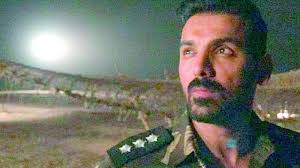
It needs courage and conviction to pick unconventional themes and less commercially viable subjects to make meaningful films. The latest additions to that list of artists and film-makers are actor-producer John Abraham and director, Abhishek Sharma who undauntedly have put together an engrossing, two-hour film ‘Parmanu: The Story Of Pokhran’ based on the Pokhran II tests in 1998, after which India was recognized as a nuclear power on the global stage.

To research and zero in on a true story of great national importance which has been, however, less hyped over the years in terms of achievement and taking a few cinematic liberties to create a gripping docu-drama and bring alive all the fascinating history of India’s biggest nuclear breakthrough is a most laudable effort by the team of makers.

To pick holes in the story-telling and fictionalized version of events would be easy for such a technically difficult subject to portray on screen packaged as an exciting and suspenseful sequence of events. What is also achieved is building up the fusion of three basic parts of the nation’s security, the nuclear scientists, the army and the intelligence agencies buttressed by some proactive bureaucratic support, all culminating into great patriotism and nationalistic pride. At the same time the film avoids the trap of  the usual jingoism and over-the-top hype of our the mainstream masala films .

John Abraham, in his new avant-garde avatar as a sensitive actor brings the same intensity to his role as he did in ‘Madras Café’ and is well supported by Boman Irani and Anuja Sathe with stellar parts. The other actors and ‘Pokharan’ desert storms lend fair authenticity to building up the tense aura of a fight against time and fending off  many forces that would prevent the successful completion of the nuclear tests in 1998, having failed once before in 1995.

Two significant comments here – one, that the show was full of College students (who would love to see what we can be truly proud of and the real people like scientist Abdul Kalam our Ex-President, behind it ) and two, the horrendous trailer of another Salman Khan magnum-opus in the making – ‘Race 3’ – one-man demolition army at work again ! ‘Parmanu’ in stark comparison is a classic, in its simplicity and sincerity of purposeparmanu 2.